Ecological context
A system, not a backdrop
A guide to the landscape, its changes and ways to care for it. This profile covers a broad habitat type; local data need site-specific research.
Habitat guide
How it works
Environmental conditions
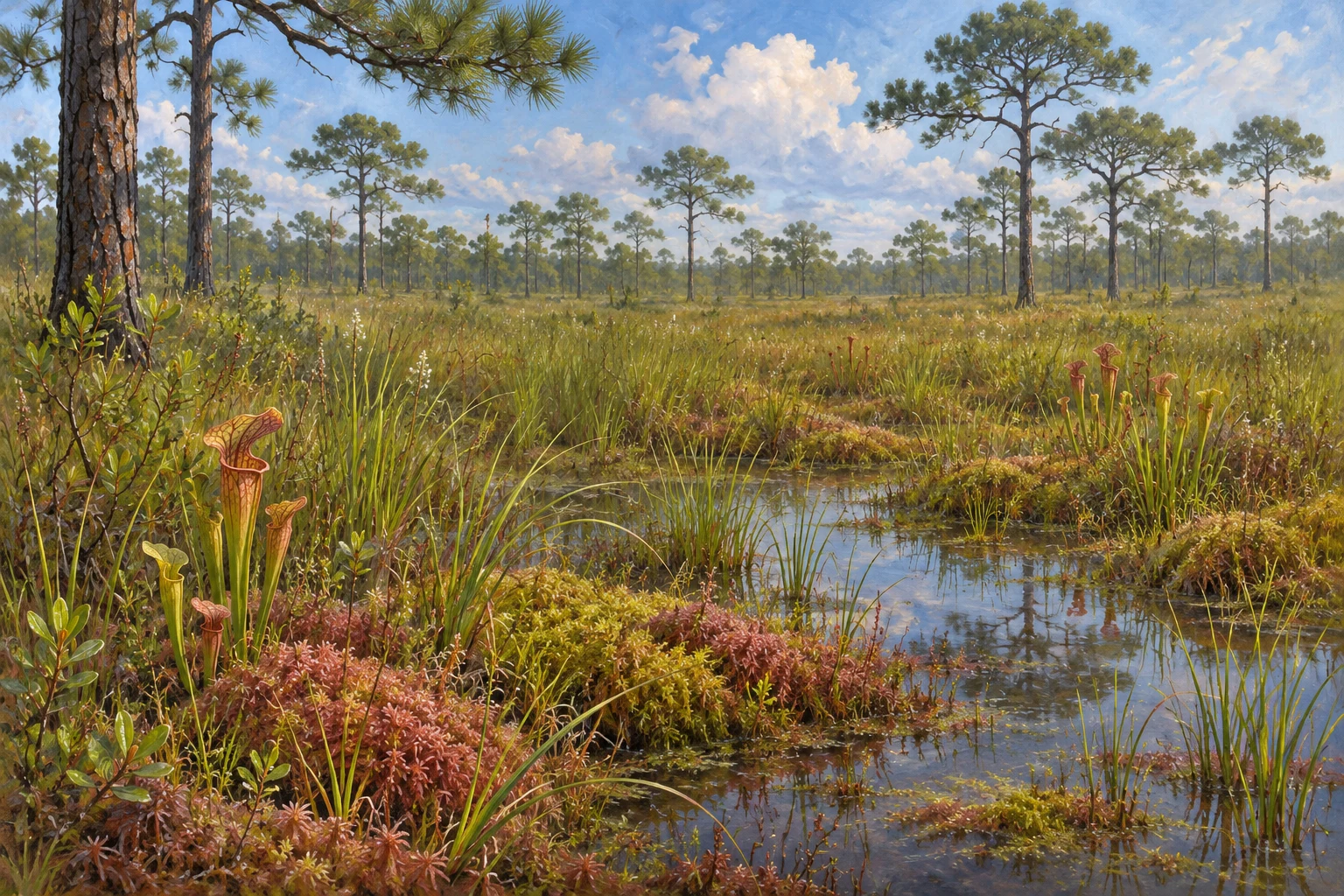
It is an acidic, nutrient-poor wetland; unlike fens, bogs receive most of their water from precipitation, not from mineral groundwater or surface water.
Distribution and scope
The distribution documented here is limited to bayheads, described as a type of bog in the forests of the US Gulf Coast states.
Structure
The vegetation cover of these bogs may include mound-forming sphagnum, in addition to low shrubs; the accumulation of plant remains constitutes the peat deposit characteristic of the habitat.
Ecological processes
Soil saturation and low oxygen availability slow the decomposition of plant remains; when this is slower than the accumulation of plant matter, peat forms.
Linked species are documented examples for a specific area. The list is not complete, and the absence of a species does not prove that it is not present.
Sources and references View references Hide references 5
Evidence base
References for checking the processes and pressures described. Regional sources do not make this overview a local inventory.
- Bog & Fen Subbiome USGS · USNVC
- Turba es.wikipedia.org
- Turbera - Wikipedia, la enciclopedia libre es.wikipedia.org
- Bog en.wikipedia.org
- Peatland en.wikipedia.org