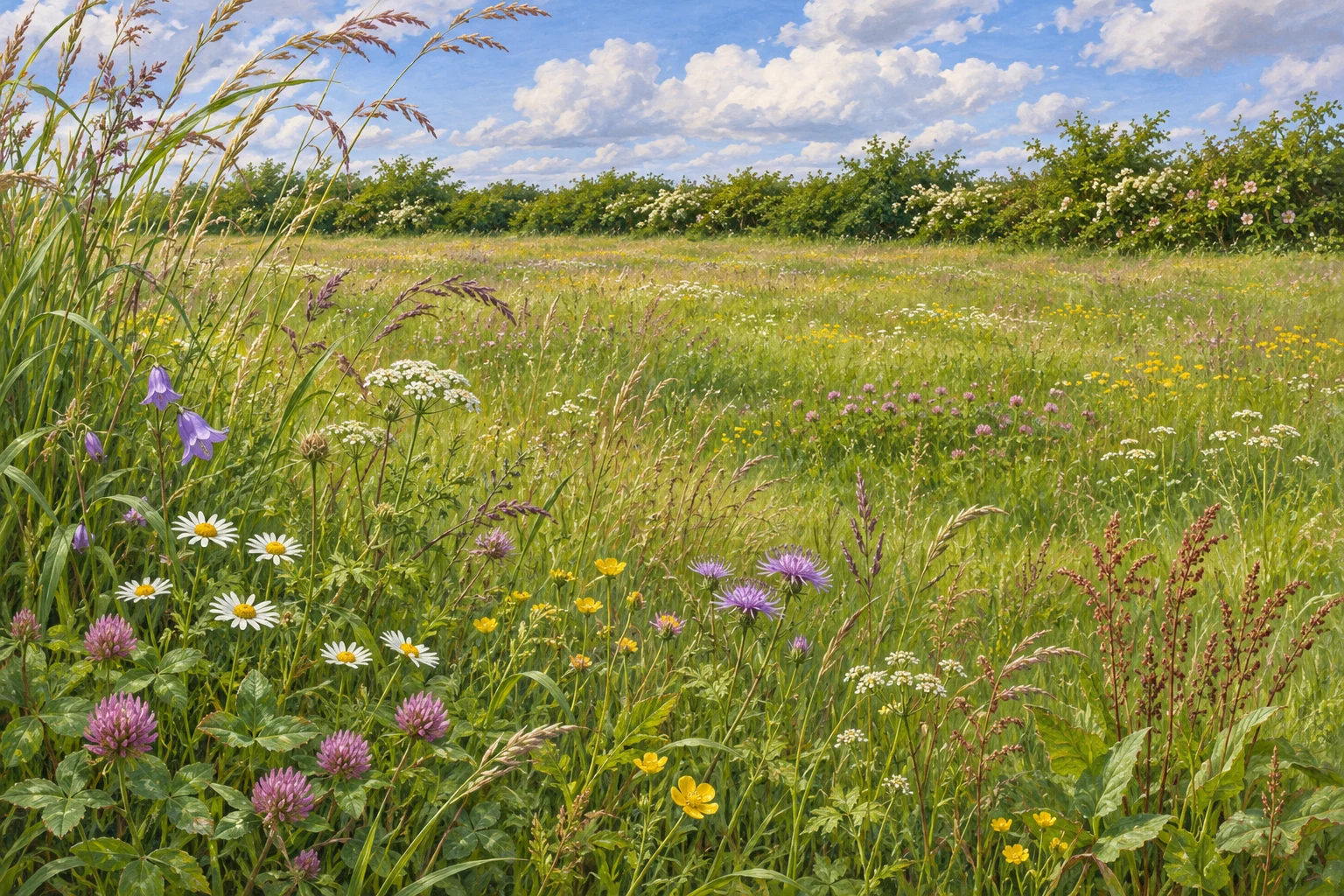
Ecological context
A system, not a backdrop
A guide to the landscape, its changes and ways to care for it. This profile covers a broad habitat type; local data need site-specific research.
Habitat guide
How it works
Environmental conditions
Light, moisture and management shape herbaceous plants and their flowering.
Distribution and scope
Flower-rich meadows vary with climate, soil and use; this profile does not describe one field.
Structure
Herbs of different heights, flowers and open ground provide resources at different times.
Ecological processes
Growth, pollination, seed production and decomposition follow seasonal cycles.
Habitat guide
Change and care
Seasonal changes
Flower supply changes through the growing season. Mowing or grazing alters this sequence, so a meadow may offer resources at very different times.
Threats
Land conversion, heavy fertilisation and unsuitable abandonment or intensification can reduce plant diversity. Management needs to fit the meadow type.
Conservation
Appropriate extensive management and uncut refuges may sustain flowering and structural variety. Check vegetation response before setting a fixed regime.
Responsible observation
Walk the same transect through the year and note open flowers, visitors, vegetation height and bare ground. Do not pick protected plants.
Linked species are documented examples for a specific area. The list is not complete, and the absence of a species does not prove that it is not present.
Sources and references View references Hide references 3
Evidence base
References for checking the processes and pressures described. Regional sources do not make this overview a local inventory.
- IUCN Global Ecosystem Typology IUCN Red List of Ecosystems
- Protecting and restoring Europe’s wild pollinators and their habitats European Environment Agency
- Extensive livestock systems and nature in Europe European Environment Agency