Ecological context
A system, not a backdrop
A guide to the landscape, its changes and ways to care for it. This profile covers a broad habitat type; local data need site-specific research.
Habitat guide
How it works
Environmental conditions
Shade, irrigation, soil and human disturbance create very different conditions.
Distribution and scope
Gardens and parks occur in urban settings; their biodiversity depends on place and management.
Structure
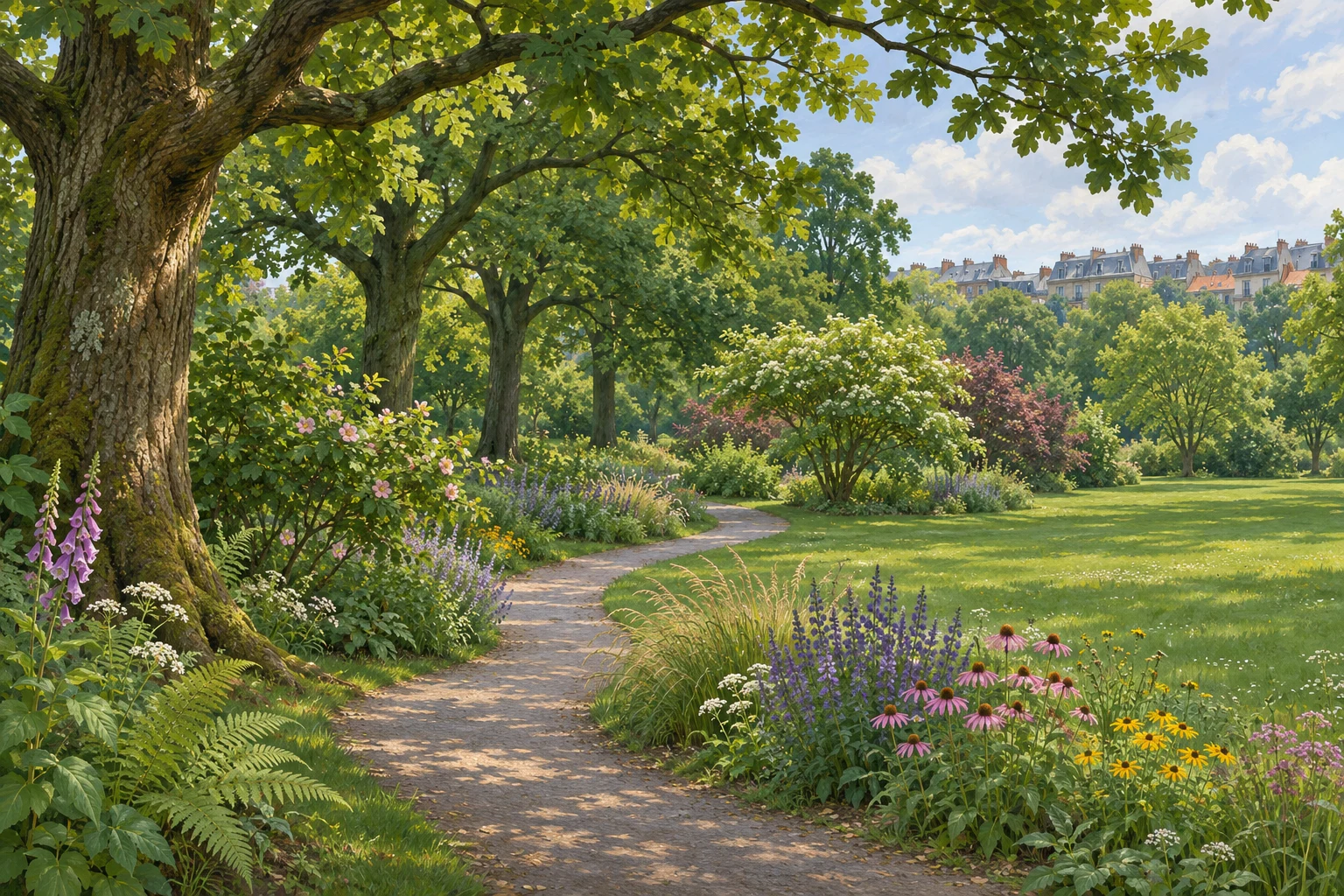
Trees, lawns, hedges, soil, water and built surfaces form a mosaic.
Ecological processes
Flowering, shelter, dispersal and decomposition depend on ecological connections and care practices.
Habitat guide
Change and care
Seasonal changes
Flowering, shade and human use change through the year; watering and pruning alter that rhythm. A pond, hedge and urban meadow respond differently.
Threats
Soil sealing, fragmentation, excessive pruning and pollution reduce resources and connections. Park size alone does not predict biodiversity.
Conservation
Permeable soil, diverse trees, suitable local plants and varied maintenance can provide refuge. Site-designed rain gardens may retain and filter runoff.
Responsible observation
Compare mown and unmown patches and sun and shade. Record wildlife without intervening or disclosing sensitive nests.
Linked species are documented examples for a specific area. The list is not complete, and the absence of a species does not prove that it is not present.
Sources and references View references Hide references 3
Evidence base
References for checking the processes and pressures described. Regional sources do not make this overview a local inventory.
- IUCN Global Ecosystem Typology IUCN Red List of Ecosystems
- Urban Soils, Ecosystem Services, and Green Infrastructure US Environmental Protection Agency
- Types of Green Infrastructure US Environmental Protection Agency