Ecological context
A system, not a backdrop
A guide to the landscape, its changes and ways to care for it. This profile covers a broad habitat type; local data need site-specific research.
Habitat guide
How it works
Environmental conditions
Posidonia oceanica forms meadows in coastal marine waters and is considered a bioindicator of the quality of those waters.
Distribution and scope
The species is endemic to the Mediterranean. The MITECO record mentions monitoring of its meadows in the Valencian Community, mainly in Alicante; it does not establish the distribution or total extent of the Spanish meadows here.
Structure
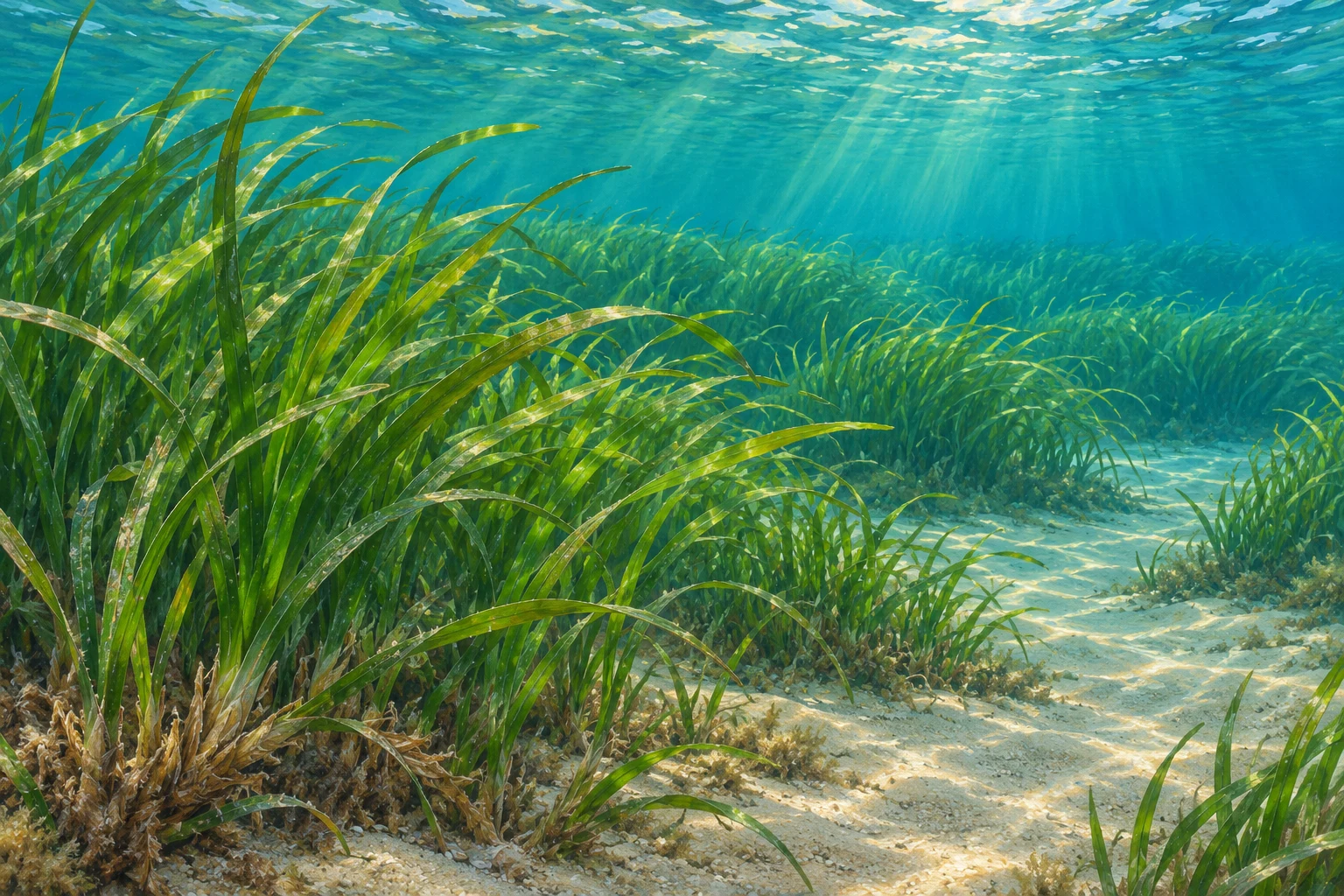
The plant has roots, rhizomatous stems and strap-like leaves up to one meter long, arranged in tufts of six or seven leaves; as it grows, it forms underwater meadows.
Ecological processes
The meadows provide food and protection to animal and plant organisms and contribute to protecting the coastline against erosion. The plant flowers in autumn and produces floating fruits in spring known as sea olives.
Linked species are documented examples for a specific area. The list is not complete, and the absence of a species does not prove that it is not present.
Sources and references View references Hide references 2
Evidence base
References for checking the processes and pressures described. Regional sources do not make this overview a local inventory.
- Posidonia oceanica es.wikipedia.org
- Reeducamar: Ciencia ciudadana www.miteco.gob.es