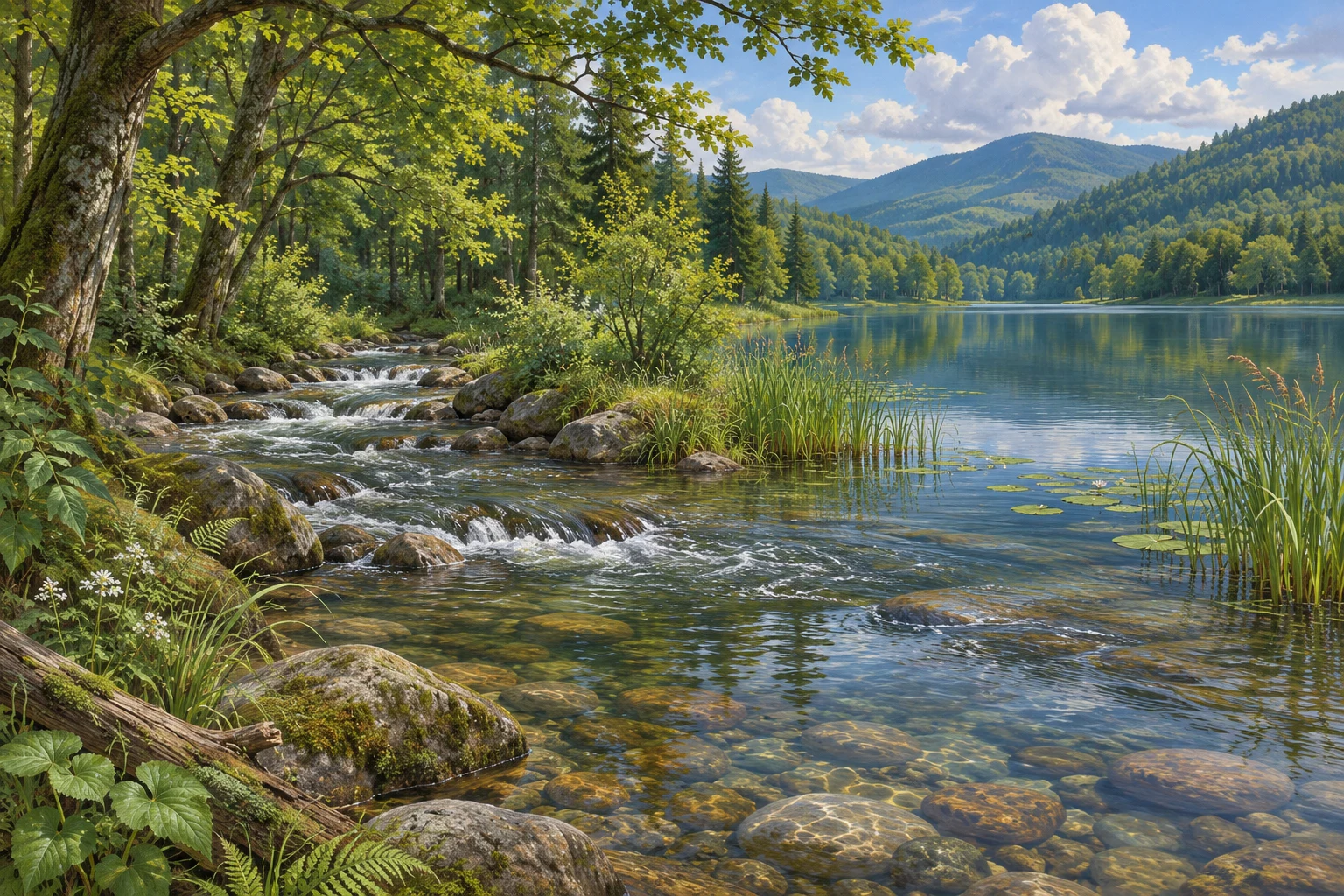
Ecological context
A system, not a backdrop
A guide to the landscape, its changes and ways to care for it. This profile covers a broad habitat type; local data need site-specific research.
Habitat guide
How it works
Environmental conditions
Flow, temperature, light and oxygen vary among rivers, lakes and seasons.
Distribution and scope
They occur across inland catchments; each water body needs a defined geographic and basin context.
Structure
Channel, bed and banks structure rivers; shore, water column and bottom distinguish lake zones.
Ecological processes
Water moves sediment and nutrients and connects organisms between headwaters, shores and downstream reaches.
Habitat guide
Change and care
Seasonal changes
River discharge and lake mixing vary with rain, snowmelt and temperature. High and low water alter links with banks and beds; timing is local.
Threats
Over-abstraction, wastewater, excess nutrients and flow barriers affect water quality and continuity. Rivers and lakes respond differently.
Conservation
Protect water quantity, quality, functioning banks and connections across the whole catchment. Upstream pressures matter downstream.
Responsible observation
From a safe bank, compare flow, clarity, bankside plants and flood marks. Do not transfer organisms between waters.
Linked species are documented examples for a specific area. The list is not complete, and the absence of a species does not prove that it is not present.
Sources and references View references Hide references 3
Evidence base
References for checking the processes and pressures described. Regional sources do not make this overview a local inventory.
- EUNIS habitat classification European Environment Agency
- Fresh water under threat UN Environment Programme
- About Fresh Water UN Environment Programme