Explanation
Artificial light and nocturnal flight: two documented effects in insects
One study reconstructed how certain insects fly around point light sources; another found fewer moth caterpillars under lighting in studied British habitats. The results describe specific mechanisms and contexts, not a universal response of all nocturnal insects.
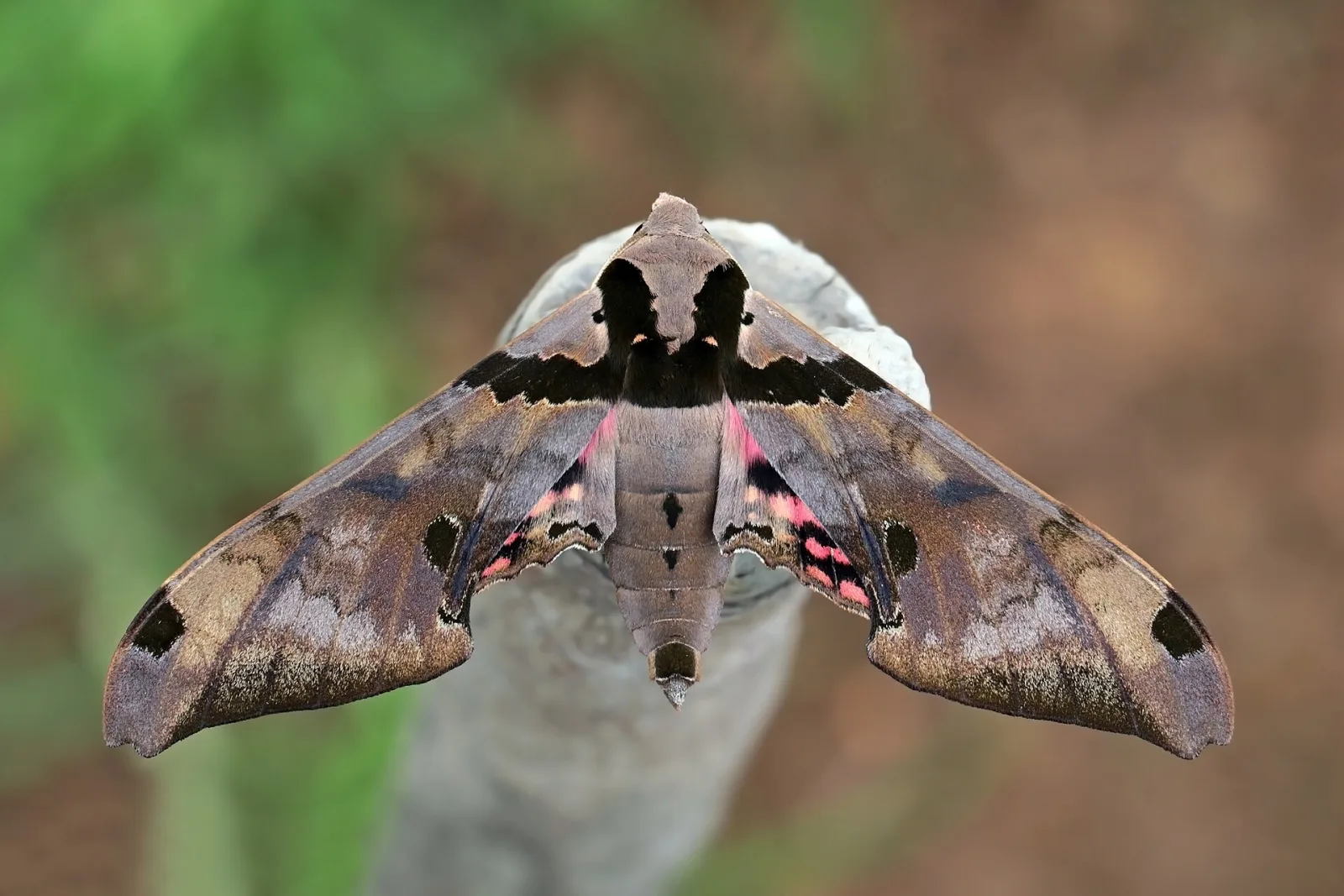
Near a light, they do not necessarily fly towards it
Using three-dimensional tracking in the laboratory and stereoscopic videography in the field, Fabian and colleagues observed that the studied insects did not guide their flight directly towards the source. Instead, they turned their dorsal side towards the light and flew in segments perpendicular to it. According to the orientation model evaluated, this response can generate continuous turns and keep the insect near the source; the authors consider it the most plausible explanation for the erratic trajectories observed.
A useful orientation under the sky, altered by a point source
The dorsal response to light can help flying insects maintain attitude and flight control: under natural sky light, the brightest sector usually serves as an orientation reference. A point artificial source can distort this reference and produce different trajectories. This is the mechanism proposed for the behaviors examined in that study, not a demonstrated description for all species or any type of lighting.
Fewer caterpillars were recorded in illuminated British sites
In Great Britain, a study with paired sites compared illuminated and non-illuminated locations. It found a 47% lower abundance of moth caterpillars in hedges and a 33% lower abundance in grassland margins under public lighting; it also recorded effects on their development. These are differences observed in those habitats and comparisons, not an estimate of the decline of all nocturnal insects.
Feeding and type of lighting in separate experiments
In a separate experiment, conducted in habitats with no history of lighting, artificial night light altered the feeding behavior of nocturnal caterpillars. The report also describes more pronounced negative effects under white LED lights than under conventional yellow sodium lamps. These results correspond to the conditions tested: they do not establish that the type of light has the same effect in all species or places.
Sources and references View references Hide references 2
- Why flying insects gather at artificial light www.nature.com