Natural-history
Bee-eaters in Doñana: from natural ground to roadside nesting
Ground that allows a nest to be excavated can also expose birds to risks. Doñana provides a documented case of changing nesting sites.
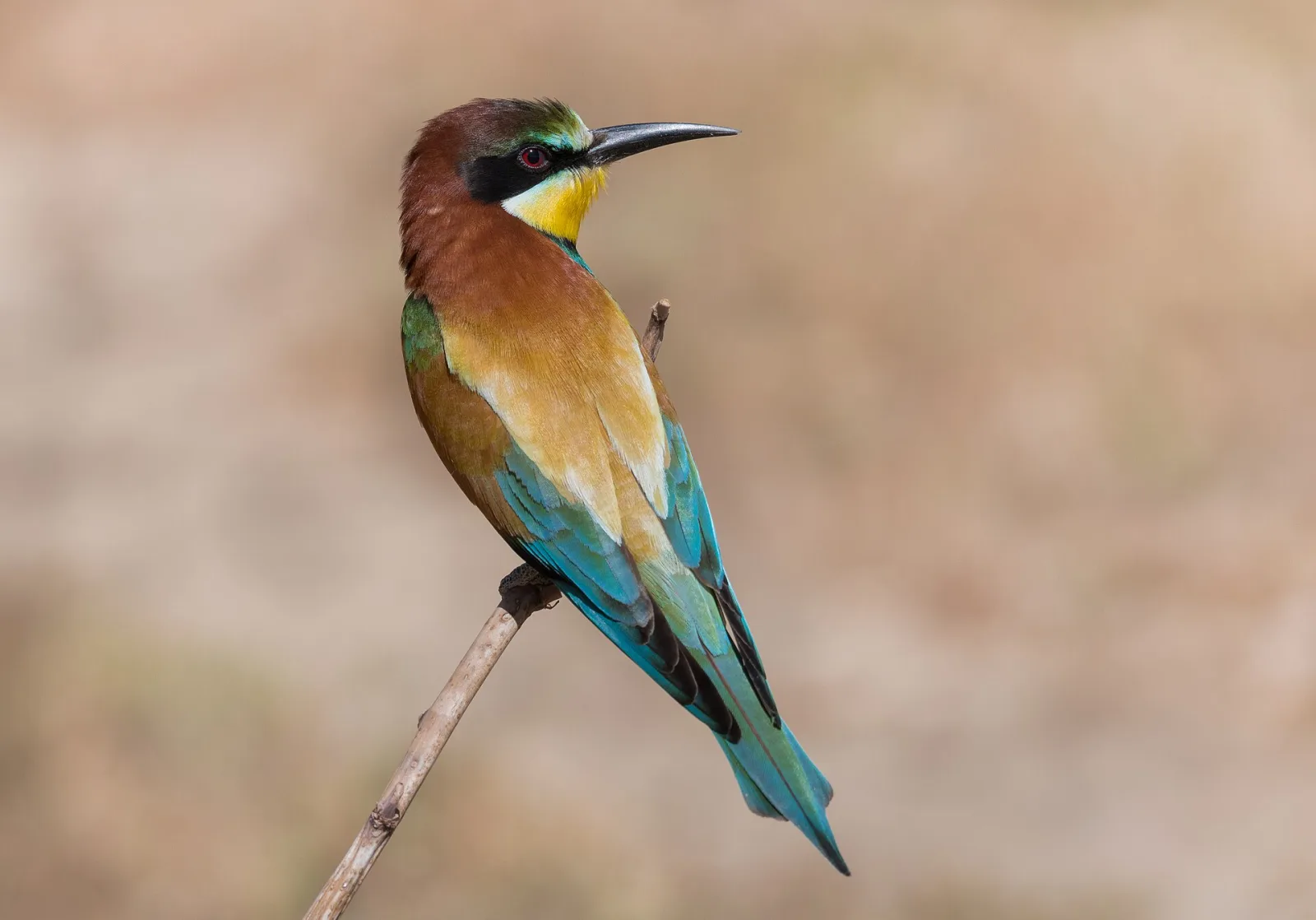
A nest dug into the ground
The European bee-eater, Merops apiaster, digs its nest into the ground. SEO/BirdLife describes sites ranging from ravines and riverbanks to quarries and roadsides. It can also nest directly in the ground: a vertical face is not essential. What connects these sites is not whether they are natural or artificial, but that a tunnel can be excavated there.
Ground that yields and holds
Sandy banks and eroded river edges provide surfaces for excavation, but slopes created by earthworks can also serve. Vertebrados Ibéricos notes that ground nesting depends on the substrate and vegetation cover. Rather than imagining a single landscape for every nest, it helps to distinguish the open surroundings from the particular surface in which the tunnel is dug.
The change recorded in Doñana
In Doñana’s vera, the transition between marsh and Mediterranean woodland, bee-eaters used ground containing a mixture of sand and clay. A June 2025 statement from the Doñana Biological Station–CSIC explains the balance: soil must yield to digging yet support the tunnel. Surveys in 2011, 2016 and 2022 recorded 61%, 94% and 97% of detected nests beside roads, respectively. These are proportions of recorded nests, not of birds or surviving chicks.
A hypothesis and a new risk
Many tracks existed decades before the shift, which began around 2000. Researchers propose that increased livestock pressure in the vera may have encouraged the move: ground nests are vulnerable to trampling. This is a proposed explanation for this case, not a proven cause for every colony. The alternative has costs too: vehicles trigger alarm responses and birds risk being struck. The team found nests beside compacted albero tracks and paved roads with low or moderate traffic, but not beside heavily trafficked roads or sandy tracks. A nest’s presence does not make every roadside safe.
Sources and references View references Hide references 3
- Abejaruco europeo seo.org
- abejarucos www.ebd.csic.es
- Abejaruco europeo - Merops apiaster - Hábitat www.vertebradosibericos.org