Natural-history
A fallen log and the cycle of matter
A decomposing log connects organisms, nutrients and carbon. Matter cycles through the ecosystem; energy follows a different path.
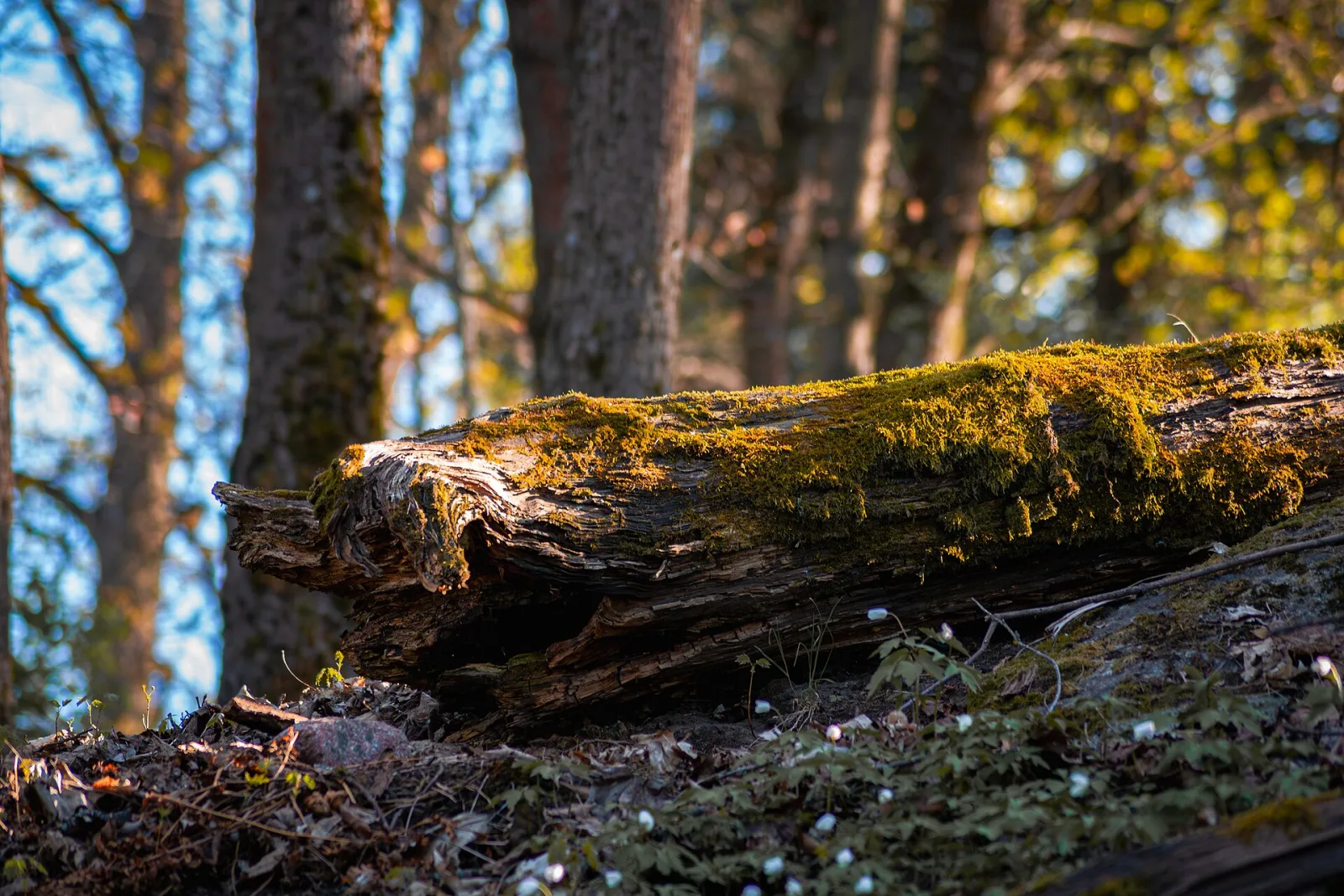
A system of relationships
An ecosystem brings together living organisms, the physical environment and relationships. A decomposing log can illustrate that connection: wood is not just an isolated object, but part of the movement of matter between organisms and their surroundings.
From life to other forms of carbon
The carbon cycle describes a broad sequence: carbon used by living things is released after death and decomposition and may then be reused by another organism. Applied to a fallen log, this serves as a general explanation of the cycle, not as a measured account of how much carbon changes form or when this happens.
Decomposers and nutrients
Decomposers transform organic remains and return nutrients to the surroundings. Biogeochemical cycles describe elements circulating between abiotic components and organic matter. This general framework sets no universal species, quantities or durations for each log.
Matter cycles; energy disperses
Elements such as carbon circulate in cycles. Energy passes through ecosystems and disperses as heat: it does not return in the same way as matter. Distinguishing these paths helps explain decomposition without confusing nutrient recycling with energy recycling.
Sources and references View references Hide references 4
- Ecossistema pt.wikipedia.org
- NAL Agricultural Thesaurus: NALT Core: ciclo del carbono lod.nal.usda.gov
- NALT: ciclos biogeoquímicos - NAL Agricultural Thesaurus lod.nal.usda.gov
- NAL Agricultural Thesaurus: NALT: ciclo del carbono lod.nal.usda.gov