Explanation
What happens when an insect visits a flower: from contact to pollen
A visit may result in feeding, pollen transport or plant reproduction, but these outcomes are not equivalent. Flower shape, visitor behaviour and the evidence used determine what can be concluded.
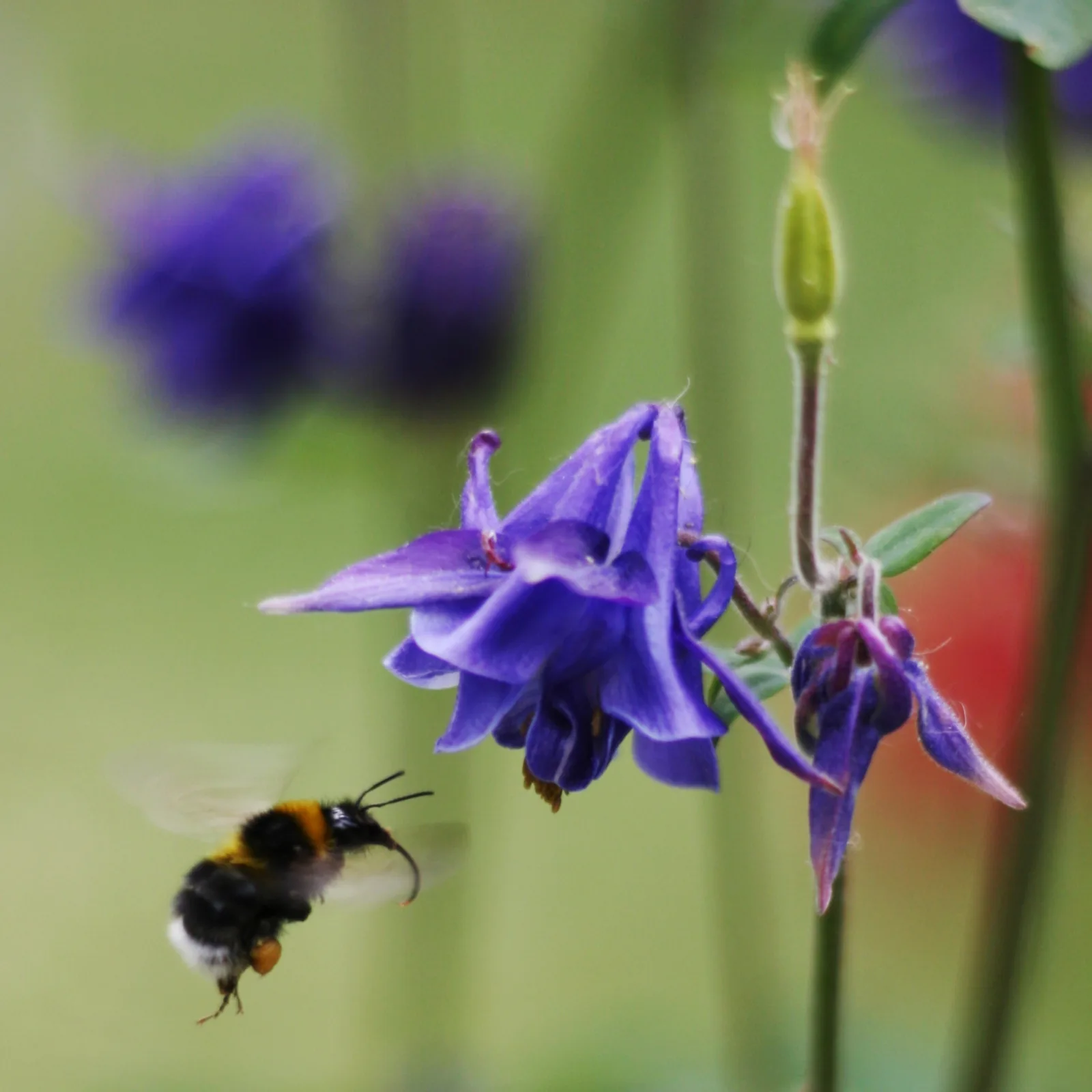
A visit is a sequence, not an outcome
When an insect arrives at a flower, it may be seeking nectar, pollen or other resources. The visit begins with approach and landing, but what happens next depends on where the reward is, the flower’s shape and how the animal feeds. As it moves around the flower, the insect may brush against the anthers—where pollen is formed—and then against a receptive part called the stigma. It may also feed without touching the reproductive organs, or leave without carrying pollen. Therefore, seeing an insect on a flower does not by itself allow us to conclude that it pollinated the flower.
Flowers are not uniform platforms. Colour, scent, shape and the arrangement of their parts all play a role in attracting visitors; the location of nectar or pollen can guide where they land and how they move. In general, contact depends both on floral architecture and on visitor behaviour: reaching the reward and touching anthers or stigmas are not necessarily the same action. Sources describe many types of visitors, including bees, wasps, butterflies, moths, flies and beetles, but their presence on a flower does not mean they are all equally effective at transferring pollen.
One useful way to follow a visit is to ask what the insect does: does it land? Does it enter the flower? Does it feed? Which parts does it touch? Does it leave with visible pollen? Does it visit another flower afterwards? These observations reconstruct behaviour, but do not always reveal whether pollen reached a stigma, whether it was compatible with that plant or whether it ultimately produced seeds. This difference between what is visible and the reproductive outcome is fundamental to interpreting the scene.
Visiting, transporting, pollinating and reproducing
It is useful to distinguish four stages that are often confused. Visiting means that the insect arrives at the flower and stays there or interacts with it. Transporting pollen means that some grains adhere to its body and may travel with it. Pollinating, strictly speaking, means that pollen reaches a receptive stigma from an anther, either in the same flower or another one. And fertilisation and seed formation are later reproductive outcomes: the presence of pollen on the stigma does not in itself guarantee that the grains are suitable, germinate or produce seeds. Wind and water can also carry pollen; an insect visit is one possible route, not the definition of pollination.
Each stage requires different evidence. Direct observation can confirm a visit and describe behaviour. Visible pollen on an insect’s body may indicate that it is transporting pollen, although it does not show that the pollen reaches a flower of the same species or its stigma. To assess transfer, researchers can count pollen deposited on the stigma after a visit; to relate it to reproduction, they can also measure seed or fruit production. In single-visit studies, the outcome for flowers that received one visit is compared with that for appropriately controlled flowers. These measures answer different questions and are not interchangeable.
A study of the alpine plant Cyananthus delavayi illustrates why this distinction matters. The researchers compared the pollen deposited and seeds produced after individual visits by three groups: halictid bees, bumblebees and hoverflies. Pollen was present on stigmas visited by hoverflies, but almost no seeds formed; by contrast, flowers visited by halictid bees and bumblebees did produce seeds. In that system, counting grains was not enough to rank visitors by their reproductive contribution.
The amount of pollen also does not necessarily indicate its origin or compatibility. A stigma may receive pollen from another species, which does not contribute to producing seeds of the visited plant. Even pollen from the same species may fail to germinate or lead to fertilisation. Conversely, a plant may form few seeds because of limitations that cannot be explained solely by the pollen deposited. Therefore, seed production after a single visit provides more direct evidence of the reproductive outcome than the mere presence of grains, although it must still be interpreted in light of the study conditions.
Behaviour may matter more than size
The relationship between a visitor and a flower is not reducible to whether the insect’s body physically fits the floral structure. In Cyananthus delavayi, nectar-seeking bumblebees and pollen-collecting halictid bees differed greatly in size, but had similar reproductive effectiveness in the study. By contrast, halictid bees and hoverflies, which were similar in size, showed very different results. The authors noted that foraging behaviour and contact with reproductive organs could matter more than a simple match in size.
In that same case, hoverflies had relatively short tongues compared with bees and made less bodily contact with the flower’s sexual organs; the study also considered their lower visitation rates. These differences help explain why a visitor may carry pollen or leave some grains on the stigma without contributing to seed production to the same extent. They are not universal rules about all hoverflies, bees or flowers: they describe a comparison conducted on one plant species and under the conditions of that study.
Flowers also vary. Some may receive pollen from several kinds of visitors; others have more specialised relationships between their shape and particular animals. These associations can influence which visitors arrive and how they contact flower parts, but an insect’s effectiveness cannot be inferred from its group or appearance alone. The relevant evidence is contact and, when reproductive contribution is being measured, the outcome obtained for that particular plant.
A case of mutualism: *Stellera* and thrips
A field study and manipulation experiments documented a particular relationship between the plant Stellera chamaejasme and the thrips Frankliniella intonsa. Adults of these small insects visited the flowers and could act as effective pollinators; long-tongued lepidopterans were also recorded as possible efficient pollinators. The research assessed visitor effectiveness and the contribution of thrips by manipulating pollination, rather than relying solely on seeing them inside the inflorescences.
Adult F. intonsa preferred inflorescences at an intermediate flowering stage and laid eggs in the floral tubes. Larvae were found in flowers from full bloom until the inflorescence withered. Measured floral longevity was 11.8 ± 0.55 days, expressed as mean ± standard error. Thus, the same floral structure is involved in two aspects of the relationship: it provides access to adults visiting the plant and serves as a breeding site for thrips.
Bagging treatments reduced the presence of thrips and seed production relative to open pollination. Fine mesh also had fewer larvae per five flowers than coarse mesh; the difference in this number between coarse mesh and the control was not statistically significant. Exclusion was imperfect during the first season, an important limitation when interpreting the experiment. The result supports a contribution by adults to the reproduction of S. chamaejasme and an association beneficial to thrips, which use the flowers as sites for egg-laying and development. This is an example of brood-site pollination: adults pollinate and the plant provides breeding sites as a reward. It should not be generalised to other plants or thrips species.
The authors related flower longevity to a pre-adult development time of 8–12 days reported for F. intonsa in another study. The timing overlap could allow insect development to take place while the flower remains available, but the comparison does not by itself demonstrate that flower longevity evolved to match the thrips’ life cycle. They also proposed that floral compounds, such as volatile substances and scents, could influence adult preference; this explanation was presented as a hypothesis, not as a mechanism demonstrated in the study.
Separating visitors: the mesh experiment
The Stellera chamaejasme experiment was conducted in an alpine meadow in Tianzhu, Gansu, China, within the Qilian Mountains Nature Reserve, at 3,100 metres elevation. This location defines the case: its results are not a measure of the contribution of all thrips to all plants. Adult and larval monitoring covered the 2017–2019 flowering seasons; pollinator manipulation took place in 2019 and 2020. Keeping these timelines separate avoids attributing all the study’s data to the same experiment.
For the manipulation, more than 300 inflorescences still in bud were marked, distributed across the population and synchronised in flowering, then randomly assigned to three treatments. The open control allowed natural visits. Coarse-mesh bags, with openings of 5–6 mm, were intended to exclude lepidopterans while allowing thrips through. Fine-mesh bags, with openings of 0.15–0.2 mm, were intended to exclude both groups. They were placed before the flowers opened and remained in place until the seeds were collected.
The design tested both the visitors’ presence and their consequences. Adults were counted at mid-flowering on a subset of inflorescences; these inflorescences were not subsequently used to measure plant reproduction. In another subset, five randomly selected flowers per inflorescence were examined as they withered, to count larvae and calculate the proportion containing them. Seven to ten days after withering, inflorescences intended for measuring full seeds were collected. Adults, larvae and seeds have different samples and units: their sample sizes cannot be added together as if they were one series of observations.
The comparison attempts to separate functions: determining who manages to access the flower, whether insect offspring develop there, and what reproductive output the plant achieves. But a bag is not a perfect switch. In the first year, some thrips entered the fine-mesh bags through the opening beside the stem. In the second year, the bags were closed more tightly and almost all thrips were excluded. Therefore, seeds from the first-year fine-mesh treatment do not by themselves demonstrate reproduction without pollinators: visits may still have occurred.
What the figures show and where the comparison ends
The adult and larval results summarised here correspond to the first season of the experiment. Quantities are expressed as mean ± standard error; n indicates the number of inflorescences in the adult and larval columns, but the number of flowers in the percentage column. The larval count is for a set of five flowers per inflorescence, not a single flower.
| Treatment | Adults per inflorescence; n | Flowers with larvae; n flowers | Larvae per five flowers; n inflorescences |
|---|---|---|---|
| Open pollination | 7.56 ± 0.70; 25 | 43.1%; 130 | 3.81 ± 0.65; 26 |
| Coarse mesh | 4.56 ± 0.68; 34 | 30.7%; 150 | 2.33 ± 0.47; 30 |
| Fine mesh | 2.41 ± 0.44; 29 | 11.3%; 115 | 0.95 ± 0.34; 23 |
The three measures show why it matters to check what the manipulation actually did. Adults were present even inside the fine mesh during that first year, and the coarse mesh also had fewer adults than the open control, although it was expected to let thrips through. It is therefore not enough to label a treatment “thrips only” or “insect-free”: that intention must be checked against the visitors counted.
Nor do all numerical differences have the same statistical support. The number of larvae per five flowers was lower in fine mesh than in coarse mesh, with P = 0.022. The difference between coarse mesh and the control, however, was not statistically significant: P = 0.14. Comparisons of adults and of the proportion of flowers with larvae did distinguish all three treatments. A table of means needs this explanation to avoid turning every visible difference into a demonstrated conclusion.
Plant reproduction was measured during both manipulation seasons. Open pollination yielded 7.76 ± 0.73 seeds per inflorescence in 2019, with n = 91, and 7.04 ± 0.99 in 2020, with n = 47. In both seasons, coarse mesh produced fewer seeds per inflorescence than the control, and fine mesh fewer than coarse mesh; these differences were significant. These are seeds per inflorescence, not success percentages or seeds per flower.
These results support the conclusion that thrips contribute to the reproduction of that population, alongside other visitors, and that the plant provides sites for their breeding. But they do not allow the effectiveness of thrips and lepidopterans to be cleanly apportioned: coarse mesh also reduced thrips’ access, so the contrast with the control changed more than one condition. The experiment’s own analysis acknowledges this limitation. Interpreting the difference as the exclusive contribution of butterflies would give the design a precision it does not have.
The practical lesson for reading pollination research is to connect each result to its measure: adults count visits or presence; larvae document breeding; seeds report the plant’s reproductive outcome. The association among these measures helps explain the mutualism, while residual entries and the effect of the bags define what can be attributed to each insect group. They do not turn chemical or evolutionary mechanisms that remain hypotheses into demonstrated facts.
What can be observed without touching the flower
A person observing a flower without manipulating it can record the time and approximate duration of visits, the type of visitor as far as reliable identification allows, the flowering stage and visible behaviour: where it lands, whether it feeds, which parts it touches and whether it moves to another flower. Recording several visits and distinguishing them from the mere presence of insects helps describe patterns. An observation guide can help identify visitor features and examine how floral shape or colour relates to them; however, observation does not automatically make every visitor an effective pollinator.
Non-invasive observation has clear limits. It may not be possible to see whether an insect carries microscopic pollen, leaves it on the stigma or carries grains from the same species. Nor can subsequent seed formation be attributed to a single visit without a design that separates that visit from other pollen sources and other conditions affecting reproduction. Answering these questions requires specific checks, such as examining pollen deposition or measuring seeds after controlled visits; each method measures a different part of the process.
In short, a floral visit may be merely a search for food, may involve pollen transport or may contribute to reproduction. The outcome depends on the encounter between visitor behaviour and flower structure, and must be assessed with appropriate evidence: observe behaviour to document visits, check pollen to assess transfer and measure reproduction to estimate consequences. No single observation replaces the others.
Sources and references View references Hide references 6
- Visitantes Florales de la FAUBA | Facultad de Agronomía - UBA www.agro.uba.ar
- Polinización | Biodiversidad Mexicana biodiversidad.gob.mx
- Pollinator bug hunt / RHS www.rhs.org.uk
- Evaluation of pollinator effectiveness based on pollen ... - PMC pmc.ncbi.nlm.nih.gov
See and listen
Images, sounds and scenes
Resources that complement the information, with their origins and reuse conditions.
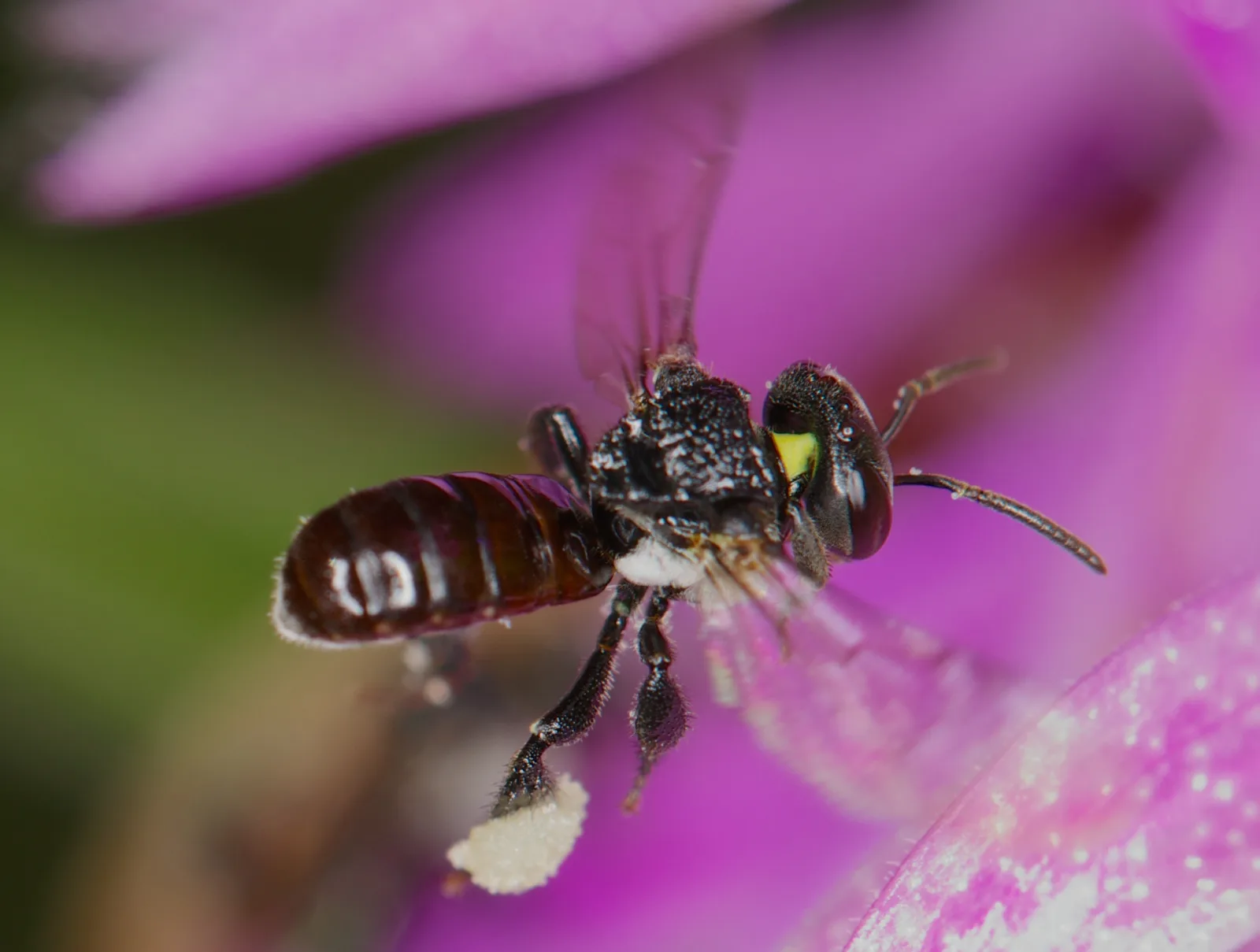
Documentary photograph: What Happens During an Insect’s Visit to a Flower