Questions-and-answers
How do loggerhead hatchlings find their first route to the sea?
On an undeveloped beach, the ocean’s open horizon provides a visual reference. Artificial lighting can disrupt that first journey.
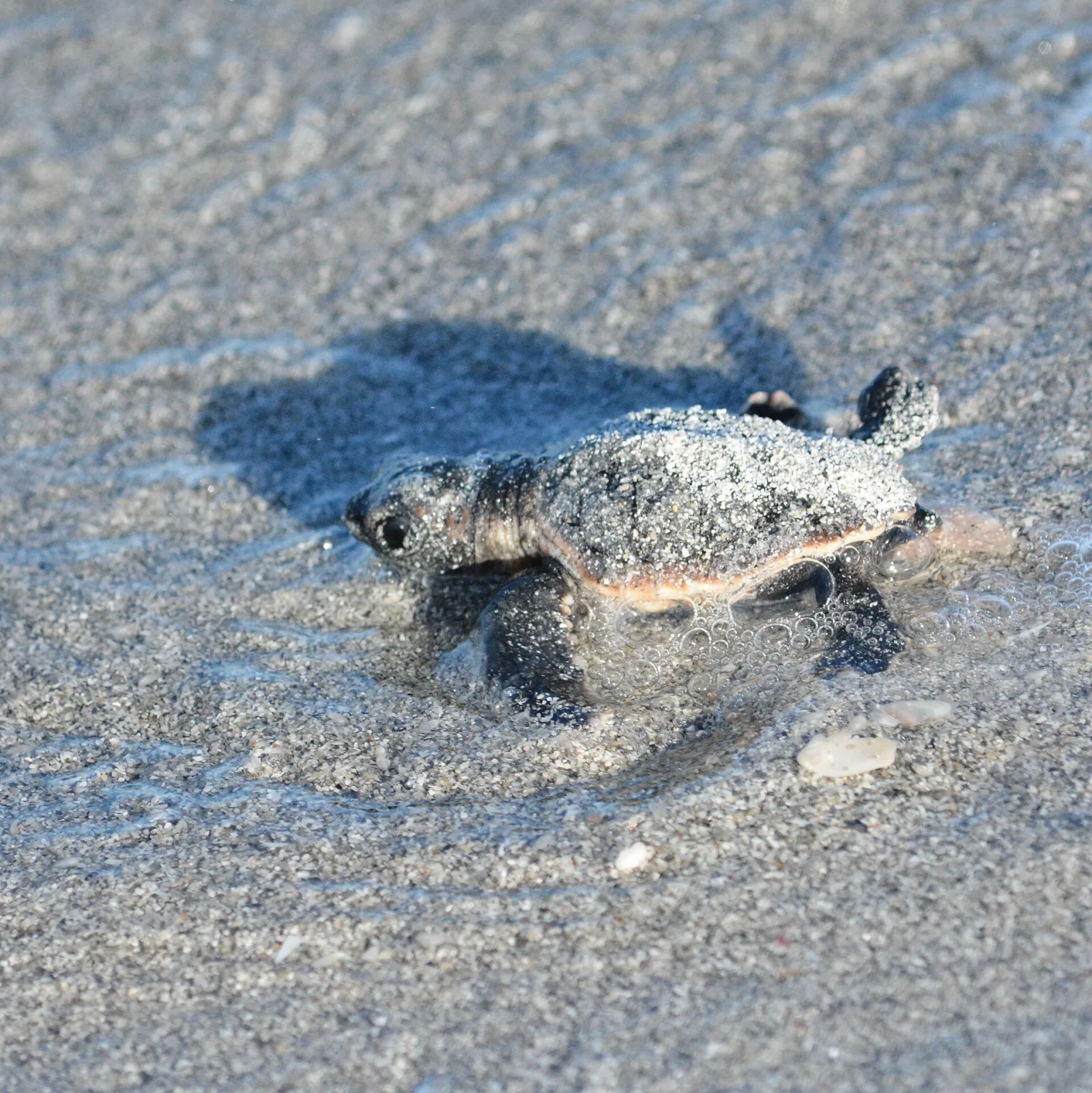
What cue do they follow after leaving the nest?
Loggerhead hatchlings move away from the darker silhouette of landward dunes or vegetation and crawl toward the brightest horizon. According to NOAA, on undeveloped beaches this points toward the open horizon over the ocean. The reference is not a coastal map: visual contrast between land and horizon helps explain this first movement across the sand. This account concerns that journey on land, not subsequent navigation in the open sea.
Why can they head in the wrong direction?
Artificial coastal lighting can disorient hatchlings and prevent them from finding the sea. NOAA describes hatchlings in artificially lit areas often crawling landward instead of toward the ocean. A useful cue on an undeveloped beach therefore need not point the right way after the lighting landscape changes. The orientation mechanism alone does not guarantee a successful journey: the visual environment in which hatchlings emerge also matters.
Does light affect only hatchlings?
No. Artificial light can also disorient nesting females, and lighting on or near beaches can deter them from coming ashore to lay eggs. These are two different stages: an adult female’s arrival on the beach and hatchlings’ departure toward the water. Sensitivity to lighting in both does not automatically imply the same mechanism or behaviour. This explanation is not a protocol for intervening with turtles or nests.
Sources and references View references Hide references 1
- Loggerhead Turtle www.fisheries.noaa.gov