Report
How Plants Respond to Changes in Light
Light can guide growth, influence development, and act as a seasonal cue. These responses are not all the same process, and the available sources do not support presenting them as a single rule for all plants.
One Signal, Several Responses
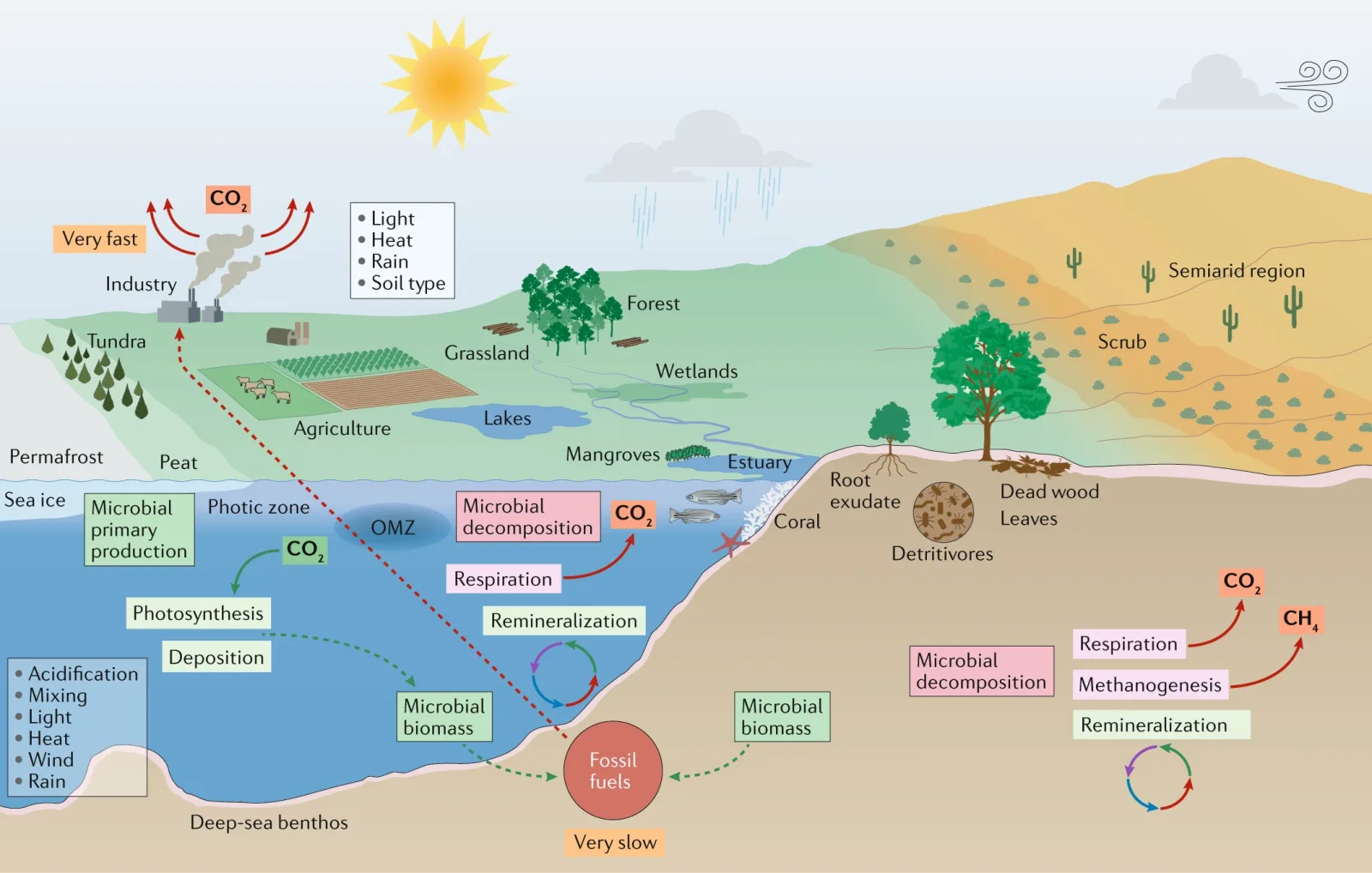
Light does not trigger just one plant response. The sources distinguish growth oriented toward a light source, developmental changes mediated by the spectrum, and responses to the relative duration of day and night. These processes are all related to light, but they are not interchangeable; making this distinction avoids reducing different phenomena to a single explanation.
Growing in a Direction
Phototropism is defined as directional growth in response to light; in plants, aerial shoots usually grow toward it. USDA terminology also distinguishes positive and negative responses according to whether growth is toward or away from the stimulus. This describes the orientation of growth; it does not claim that all parts of a plant respond in the same way.
Light also affects development
Photomorphogenesis is light-mediated development and its responses to the spectrum. It differs from photosynthesis, in which light is used as energy. Phytochromes, cryptochromes and phototropins are receptors associated with different light bands.
Night Matters in the Plant Calendar
Photoperiodism is the response to the relative duration of light and darkness. For short-day plants, the USDA definition emphasizes the need for a long period of darkness. Day-neutral plants, by contrast, are defined by flowering that does not depend on the length of the light or dark period. These categories describe different responses, not a rule that applies to every species.
An explanation based on receptors
The USDA thesaurus describes two forms of phytochrome, Pr and Pfr, and links red-light absorption with germination, growth and flowering responses. Photoperiodism includes signals of day and night duration. These are different aspects of how a plant perceives and responds to light.
When Illumination Fluctuates
A scientific review hosted by the United States Agricultural Research Service examines variable light within crop canopies. According to its summary, photosynthetic responses are not instantaneous, and rapid changes can reduce carbon gain and productivity in field crops. The review notes that canopy structure affects the sunflecks received by lower leaves; these findings concern that agricultural context, not all plants.
Described Mechanisms and Open Possibilities
The review attributes part of the slow response to the activation and deactivation of enzymes, the opening and closing of stomata, and the regulation of photoprotection. It also suggests that C4 photosynthesis could be more or less resilient than C3 depending on the frequency of fluctuations: the source itself presents this comparison as dependent on the light regime, not as a uniform conclusion.
The context of each response
Phototropism, photomorphogenesis, photoperiodism and photosynthesis describe different processes. Findings on fluctuating light in crop canopies should not automatically be extended to every species and environment. Responses depend on the process and conditions examined.
Sources and references View references Hide references 9
- Fotoperiodo es.wikipedia.org
- Fotomorfogénesis es.wikipedia.org
- NALT Core: fototropismo - NAL Agricultural Thesaurus - USDA lod.nal.usda.gov
- NAL Agricultural Thesaurus: NALT Core: tropismos lod.nal.usda.gov
- NAL Agricultural Thesaurus: NALT: plantas de día neutro lod.nal.usda.gov
- NAL Agricultural Thesaurus: NALT: fitocroma lod.nal.usda.gov
- NAL Agricultural Thesaurus: NALT: plantas de día corto lod.nal.usda.gov
- The impacts of fluctuating light on crop performance www.ars.usda.gov
- NAL Agricultural Thesaurus: NALT: fotoperiodismo lod.nal.usda.gov
See and listen
Images, sounds and scenes
Resources that complement the information, with their origins and reuse conditions.
Documentary photograph: How Plants Respond to Changes in Light