Observation-guide
How to record feeding signs on hazelnuts: clues and limits
Hazelnut shells can preserve visible differences among signs attributed to various mammals and birds. Recording the shape of the hole and where tooth marks appear helps compare clues, but does not turn an isolated shell into a certain identification.
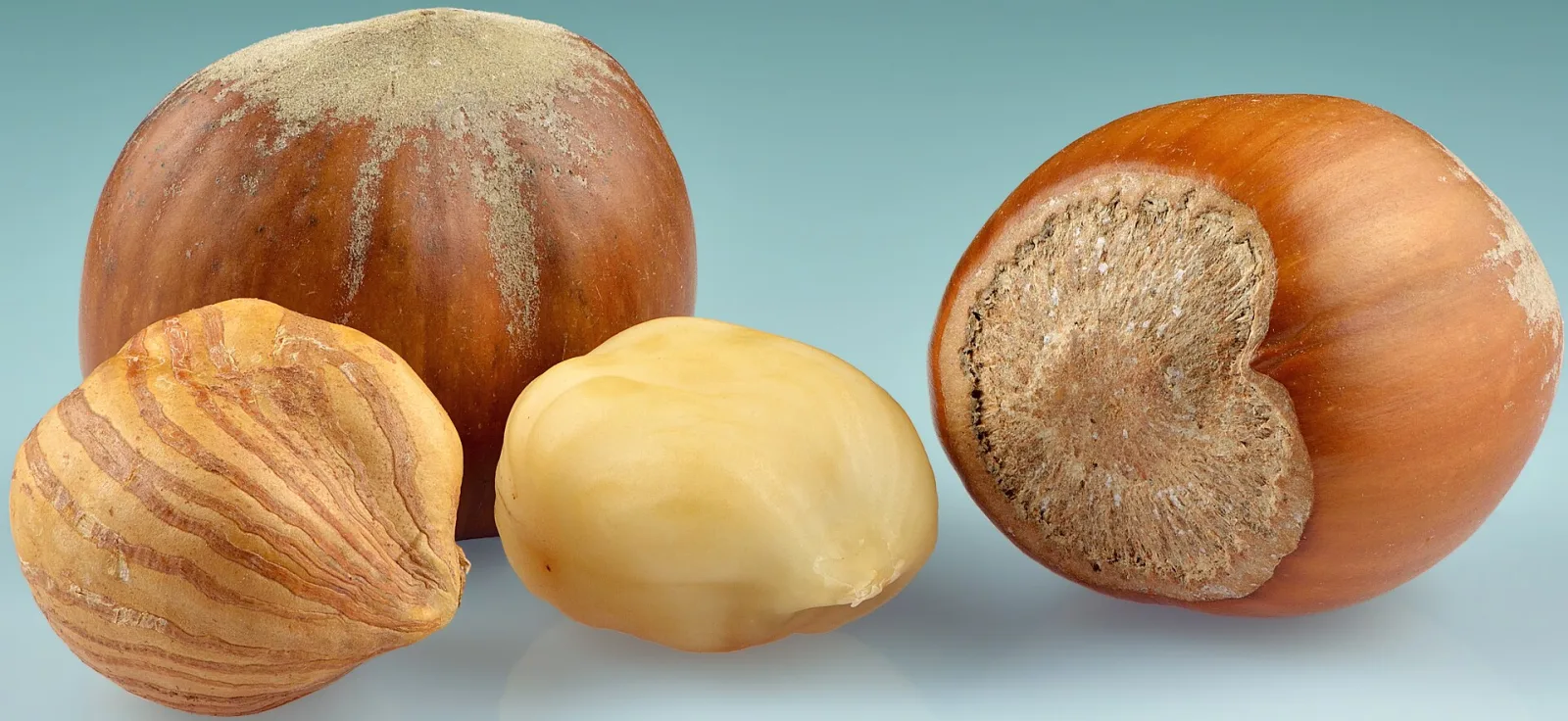
Describe the shell before attributing it
Note which parts of the hazelnut are present, what the opening looks like, and where marks can be seen on the shell. Keep observations separate from interpretation, and leave anything you cannot see undetermined. These features allow comparison with signs described on hazelnuts in the United Kingdom; they are not a general key for identifying consumers of all fruits and seeds.
Signs described on hazelnuts
Red and grey squirrels can split a hazelnut cleanly in two. Common dormice leave a smooth, round hole in the side, with tooth marks around its inner edge; this pattern is used to record their presence in woodlands. Wood mice leave marks on the surface and across the edge of the hole, which may be circular or irregular. Bank voles also make a round hole, but their tooth marks appear on the edge, not on the surface of the shell.
Other remains and signs that can cause confusion
Irregular outer fragments beneath a tree could have come from birds. Woodpeckers and nuthatches can wedge hazelnuts into crevices to hold them while they hammer at them. In addition, some rodents move nuts to a more sheltered place; therefore, a pile beneath leaves or logs does not show that the hazelnut was opened there, nor does it identify the consumer by itself.
How to record a comparison
For each record, describe the shell in concrete terms: whether it is split into halves, the shape of the hole, and the location of the tooth marks—on the surface, on the edge, or around its inner face. Also note any irregular outer remains and where you found the group of remains. Keep these observations separate from the hypothesis about the animal, and retain alternatives when the signs partly overlap. The comparative description concerns hazelnuts and the animals mentioned in the United Kingdom source; it should not automatically be extended to other species or regions.
Scope of attribution
The differences described allow for bounded comparisons, not certainty about what left a particular shell: nuts can be moved, and some signs, such as a round hole, occur in more than one group. Record the observed pattern and state any attribution as provisional, especially if visible marks are missing or the context of the find is unclear.
Sources and references View references Hide references 2
- Hazelnuts: Where and When to Forage Woodland Trust