Life near you
A field notebook in your neighborhood: how to observe, take notes, and return
Choose a nearby place, record what you observe, and return with a question. Learn to compare visits, separate description from interpretation, and observe wildlife without disturbing it.
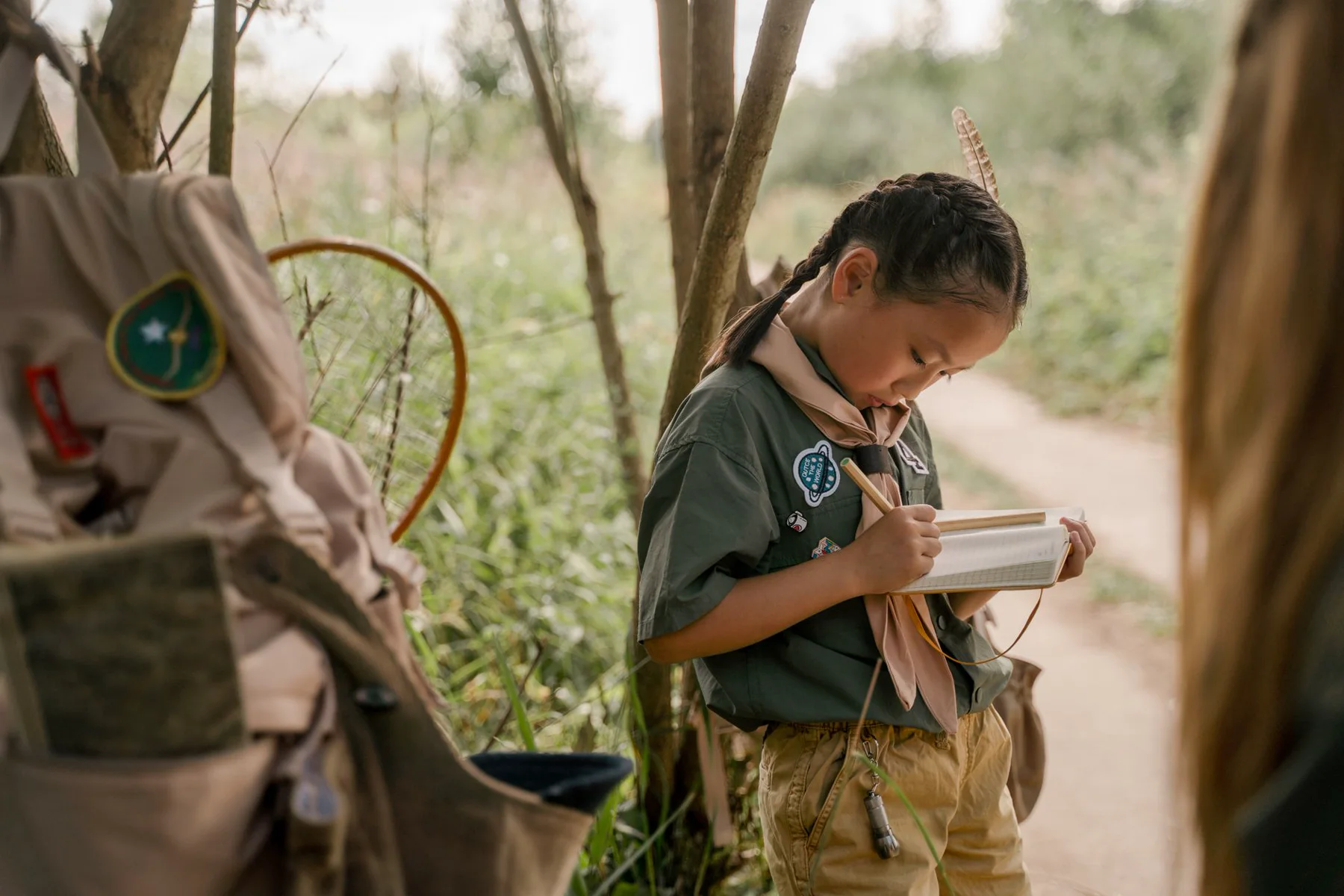
Start with a place and a question you can revisit
A field notebook does not need to begin with the name of a species. It can begin with something that intrigues you about a place where you already take walks: what changes in a wooded area with the seasons, what living things share a corner, or how shadows shift. The U.S. National Park Service suggests observing nature and its seasonal changes, including changes in shadows, as a starting point for keeping a journal. That invitation can also work in a square, yard, street, or balcony: choose a place you can observe from a permitted area and can reasonably return to. It does not need to be spectacular. A familiar place can offer opportunities to compare different visits.
Try to make your first question narrow enough to guide your attention. “What do I observe in this tree when I return?” lets you focus on one place; “What animals live in my neighborhood?” covers much more than one outing can resolve. You can also begin without a question and write one down later, when something catches your attention. In either case, let curiosity guide your observation without treating the answer you expect as fact. The initial goal is to learn to look and recognize what you would like to observe again.
Return and preserve the context of each visit
A single entry preserves a moment; several visits can help you notice differences. The U.S. National Park Service nature journal invites people to observe changes in nature over time, including seasonal changes. To make your own comparisons, choose a frequency you can maintain and, when possible, return to the same place. There is no single schedule that all notebooks must follow: occasional visits may be enough if you clearly note when they took place.
At the start of each entry, record the date, approximate time, place, and how long you observed. Add conditions that will help you remember the scene, such as whether there was sun, shade, wind, or rain, and whether you changed your route or observation point. The point is not to present these notes as a census, but to preserve the context for interpreting what you managed to see. The Chesapeake & Ohio Canal park’s educational observation sheet offers a related approach: during a walk, it suggests noting living and nonliving parts of the ecosystem and interesting interactions.
If you do not observe something you saw on another occasion, note the difference without immediately concluding that it has disappeared. Perhaps the visits took place at different times, lasted for different lengths of time, or you focused your attention elsewhere. And if you changed your route, say so: that way, you will not confuse a change in how you observed with a change in the place. Differences between two entries raise questions; by themselves, they do not explain what caused them.
Write an entry you can understand later
When you return to your notes, you should be able to reconstruct what you observed and under what circumstances. A simple format can separate context—date, time, approximate place, and duration—from a description of what you found. Then you can add a drawing, a sketch map, or a question for your next visit. These are not mandatory boxes to fill in; they are tools that keep memory from having to supply the details later.
Describe features and actions before interpreting them. “Three similar insects visited purple flowers” records an observation; “they were the same species” adds an identification you may not have confirmed. “A bird perched on a branch” describes an action; “it took shelter there” assigns a function. If an identification seems likely but is not certain, mark it as tentative and keep the features you actually saw alongside it. The description will still be useful even if the name later changes.
Observable details—shape, color, approximate size, or behavior—are usually easier to review than words such as “strange” or “beautiful.” If you did not see something clearly, write that down. Not observing a feature does not prove that the organism lacked it. A simple drawing can help you remember the layout of an area or a feature you want to check; it does not have to be an accurate illustration. A photograph can also accompany the note, but text can preserve details the image alone does not tell you, such as how long the observation lasted or what you were trying to look at.
Record relationships without turning them into causes
Instead of recording only names, observe the surroundings too: where there was shade, which plants were present, whether there was water or bare soil, and which organisms you saw there. The Chesapeake & Ohio Canal sheet suggests recording biotic and abiotic elements and interesting interactions observed during a walk. You can use this approach to notice both the components of a place and what happens among them, without assuming that every visit will reveal a clear interaction.
For example, in an imaginary sketch map you could draw a tree beside an open area, mark where the shade fell, and describe an animal you saw perch on a branch. Keep the two parts separate: “it perched on the branch” is what you saw; “it used the tree for shelter” is a possible explanation, but one not necessarily confirmed by that observation. The drawing helps you remember where the scene took place; it does not prove what caused it.
You can also describe a flower and a visitor observed during the same visit without claiming that this alone shows what their relationship is. A careful note can prompt a question for next time: Do I see visitors at that spot again? Under what conditions? Which features can I distinguish? Repeating the observation and preserving the context can guide better comparisons, but it does not guarantee that you can establish a cause. The distinction between what was observed and what was interpreted does not weaken the note: it shows what you know and what remains to be checked.
Identify cautiously and leave questions open
You do not need to identify every organism for the notebook to be useful. If you do not know what you saw, write down the features you could distinguish and leave the name pending. Later, you can consult a guide or an app, but make clear that the identification is only a proposal if you have not confirmed it. That way, the original observation is not erased when your interpretation changes.
Use the same caution with patterns. If a plant is flowering on one visit but not another, record the dates and conditions before explaining the difference. If you observe a visitor near a plant, note what happened without attributing an intention you could not observe. An educational field sheet may suggest what to look for, such as living and nonliving elements or interactions, but it does not turn a single observation into a general conclusion about the neighborhood.
Your notes can also reveal the limits of your own record: perhaps you always visit at the same time, observe from different points, or cannot distinguish a particular feature well. It is useful to note these limits, not to invalidate what you saw, but to decide what to change or keep the same on your next visit. When comparing two entries, first check which conditions and methods are similar and which are not.
Observe wildlife without disturbing it
A note does not improve by getting closer. The National Park Service advises giving animals space, observing them from a distance, and not touching, feeding, or disturbing them. If they react to your presence, step back and give them room to move. Binoculars or a camera with a zoom lens can help you observe without approaching. Recommended distances and rules vary among parks; check the rules for the place and do not treat a distance set for another area as universal.
The U.S. Fish and Wildlife Service also recommends observing from a distance, respecting nesting and resting areas, and not touching animals. A guide from the same agency about nests advises admiring them from a distance and explains that disturbance can affect birds. If you find a nest or an animal that moves away when you approach, do not follow it or seek a closer image: note what you could see from a respectful distance and continue on your way.
The information you share also matters. GBIF’s good-practice guide discusses generalizing location data for sensitive species to reduce risks associated with disclosing precise locations. If you publish an observation, consider whether the text, map, or image makes it possible to locate a vulnerable place; in such cases, do not disclose a precise location. The National Park Service advises against sharing locations of species with special status or nests observed in Biscayne National Park. That guidance applies to that park: local guidelines may vary, so check the applicable rules before sharing details.
Review your notes and choose what to look at next
From time to time, sort your entries by date and read them again. Look for differences that are actually recorded: a behavior, a change in the place, or different conditions between visits. Distinguish descriptions from interpretations and flag identifications that are still tentative. If context details are missing or you changed your route, take that into account before comparing. A notebook does not need every page to be the same; differences in how you observe should, however, be visible.
End your review with a small question you can revisit. You might return to a particular spot, look more closely at a feature, or record the conditions of the visit more fully. The National Park Service nature journal focuses on observing nature and its changes; the Chesapeake & Ohio Canal sheet invites attention to living and nonliving components and interactions. These approaches are starting points, not a required format. Getting started means looking, writing down what you saw and what you could not confirm, and returning without putting at risk what you want to learn about.
Sources and references View references Hide references 7
- Nature Journaling U.S. National Park Service
- 7 Ways to Safely Watch Wildlife U.S. National Park Service
- U.S. Fish & Wildlife Service: observación respetuosa de fauna U.S. Fish & Wildlife Service
- Observation Sheet — Nature Writing, C&O Canal NHP U.S. National Park Service
- U.S. Fish & Wildlife Service: observación respetuosa de fauna U.S. Fish & Wildlife Service
- U.S. Fish & Wildlife Service: observación respetuosa de fauna U.S. Fish & Wildlife Service