Explanation
Where energy comes from in hydrothermal vent communities
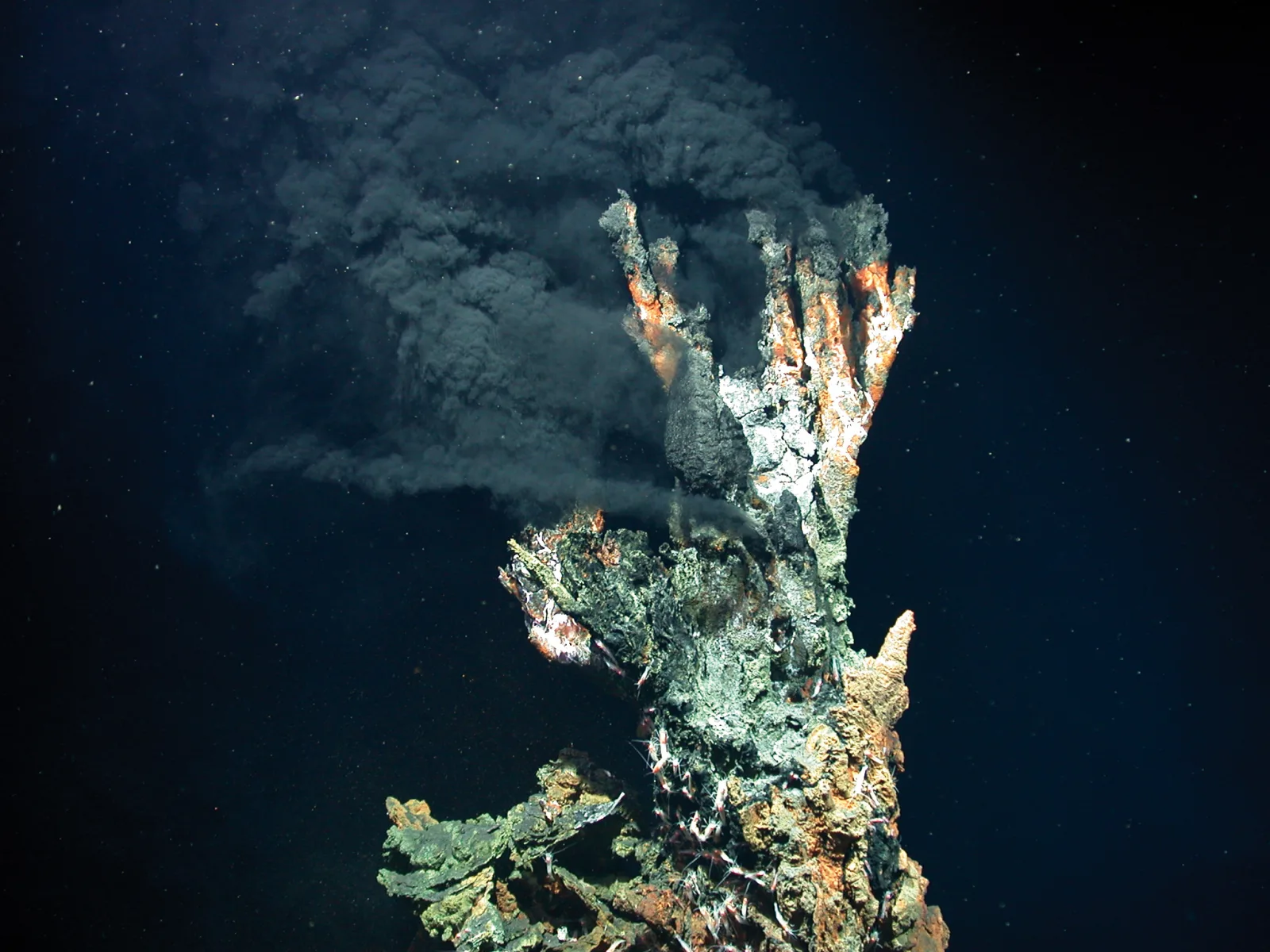
At deep-ocean hydrothermal vents, bacteria and archaea use chemical reactions to produce organic matter. This production feeds webs of life that can develop without local sunlight.
The beginning of the food web
At deep-ocean hydrothermal vents, food production can begin with microorganisms that use chemical energy, without needing light to carry out that process. This is called chemosynthesis. Bacteria and archaea harness the energy released in certain reactions and use it to turn inorganic carbon into organic molecules: material with which to grow and reproduce. This creates a food base capable of sustaining animal communities in darkness.
Two things need to be distinguished: carbon is building material for those molecules; energy makes the transformation possible. Carbon dioxide can supply carbon, but it does not replace the chemical energy source.
Energy is released in reactions
Hydrothermal fluids supply substances that microorganisms can use in their metabolism. When these fluids mix with the surrounding seawater, chemical conditions change and substances involved in the same reaction can come together. For example, some microorganisms obtain energy by oxidizing hydrogen sulfide and use oxygen in that process. They then use that energy to fix carbon.
Hot water alone is not what becomes food. Geological activity creates the hydrothermal setting and its chemical conditions; the decisive biological step is harnessing chemical reactions to sustain organic matter production.
There is no single chemical recipe
Hydrogen sulfide is an important example, but it does not describe every metabolism at every vent. Compounds that different microorganisms in these systems can use also include hydrogen and methane. Fluid composition varies with the geological setting and the rocks with which the fluids interact.
Chemosynthesis therefore does not mean attributing a single reaction to the entire community. Different microorganisms occupy environments with different chemical conditions.
How this production reaches animals
Microorganisms can live freely, form microbial mats or associate closely with animals. Their organic matter enters the food web when other organisms eat them, graze on them or capture them from the water. From there, it can pass to other feeding levels.
Another route is symbiosis: certain animals house chemosynthetic bacteria inside their bodies and receive organic matter produced by them. Examples include tubeworms and mussels from these environments. This does not mean that every animal at a vent has symbiotic bacteria or that they all feed in the same way. Microbial production sustains a web with several feeding relationships, rather than a single chain.
Living beside a vent does not mean living in its hottest fluid
A hydrothermal vent brings together different environments: fluids at different temperatures, mixing zones, rocks and surfaces colonized by microorganisms. The temperature of the fluid emerging from an opening is not necessarily the temperature experienced by every organism in the community. Nor does it, on its own, reveal their growth temperature or survival limit.
This explanation concerns deep-marine hydrothermal vent communities. Their central feature is organic matter production driven by chemical energy, without local photosynthesis. The diversity of conditions and metabolisms prevents this general mechanism from becoming an identical description of every vent or all its inhabitants.
Sources and references View references Hide references 2
- Chemosynthesis — NOAA Ocean Exploration oceanexplorer.noaa.gov
- Hydrothermal vents Woods Hole Oceanographic Institution