Explanation
Otter scent marks in Spanish rivers
Otter droppings also act as scent signals. Their location and frequency need careful interpretation.
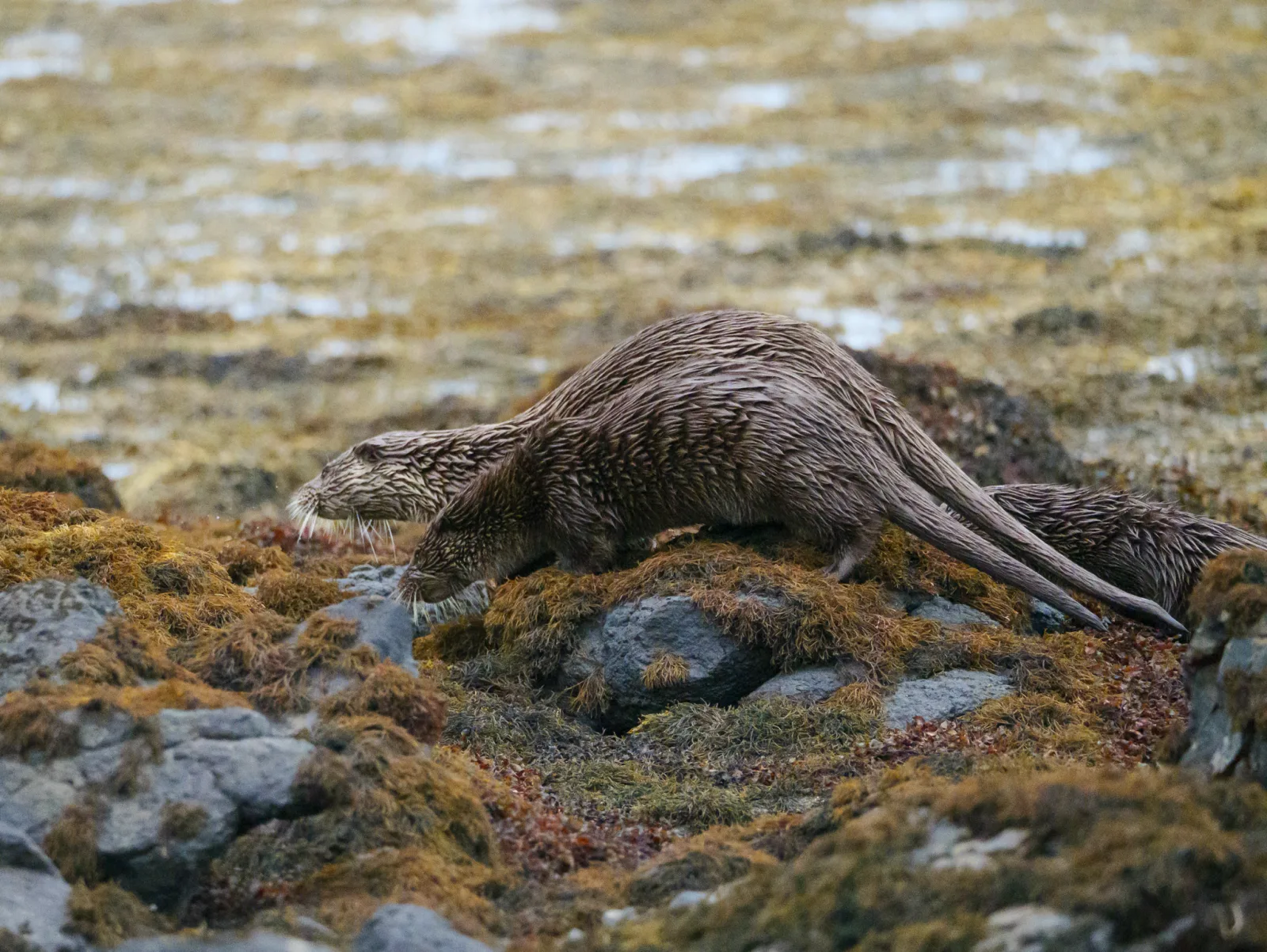
Signals beside the water
The Eurasian otter, Lutra lutra, uses droppings and anal marks to communicate. Droppings may occur at prominent river features such as stones, fallen trunks or bridge bases.
Communication does not always mean exclusion
In an experiment in Asturias and León, adding the scent of other otters prompted olfactory investigation. A scent mark does not by itself imply an aggressive response.
Signs, not a census
Marking frequency varies with season and reproductive circumstances. Counting droppings does not directly reveal how many otters are present; failing to find them does not prove absence either.
Sources and references View references Hide references 5
- Lutra lutra - Wikipedia, la enciclopedia libre es.wikipedia.org
- Nutria (Lutra lutra) en España www.miteco.gob.es
- Método de muestreo y discusión del mismo — Nutria en España MITECO — Juan Jiménez, Miguel Delibes y Antonio Callejo
- Nutria — Lutra lutra: comportamiento Museo Nacional de Ciencias Naturales — Jordi Ruiz-Olmo, versión 2017
- Demuestran experimentalmente que las nutrias europeas tienen un carácter más social de lo que se pensaba Museo Nacional de Ciencias Naturales — CSIC, 1 de abril de 2026