Collection
Signs of Life in Dead Wood
Dead wood provides habitat for diverse organisms. Ecological studies and forest-planning tools address different functions in their particular contexts.
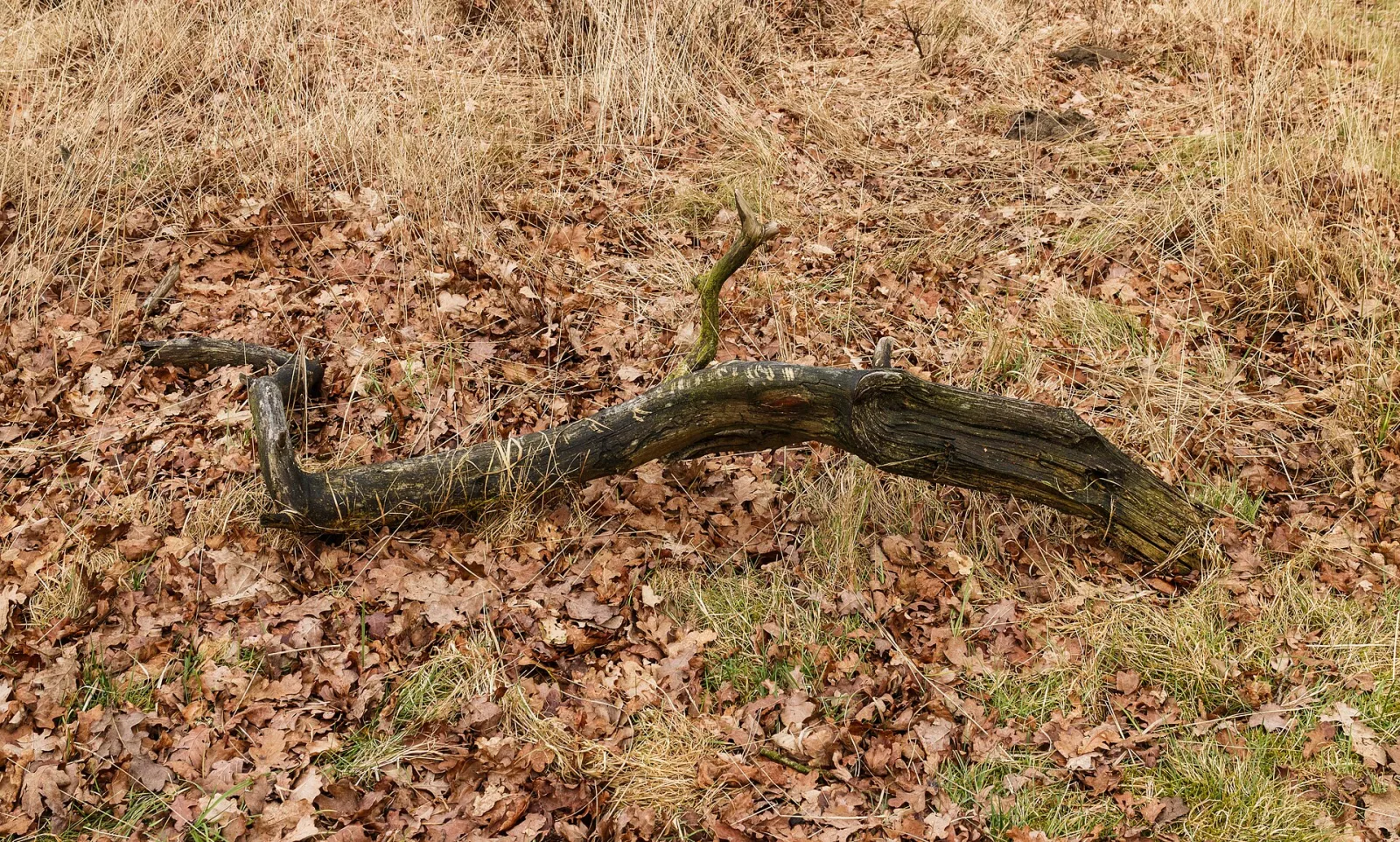
Wood is also habitat
Standing dead trees, fallen wood and decaying living trees are part of forest habitats. Their functions depend on the forest and context; a general description cannot identify the organisms on a particular log.
Different organisms and structures
The cryptogam study examines dead-wood structures in temperate broadleaved forests not dominated by beech. Standing or fallen wood, especially large pieces, can provide habitat for specialised organisms.
DecAID considers standing dead trees, fallen wood and decaying living trees. It is a planning tool based on data and research from Oregon and Washington, not an inventory of every forest.
When a dead tree falls
The fall of standing dead trees can redistribute wildlife habitat and have consequences for public safety and the carbon cycle. These are different dimensions of the same process: conserving a habitat feature and managing a hazard are not identical questions.
Every forest has its context
The habitat functions of dead wood do not mean that every piece supports the same species or that one amount is suitable for every forest. Ecological contexts and management objectives need to be distinguished.
Sources and references View references Hide references 4
- The role of moose as a disturbance factor in managed boreal forests www.silvafennica.fi
- What is DecAID Advisor? decaid.fs2c.usda.gov