Comparison
Simple and compound leaves: the difference lies in the blade
A simple leaf can have cut edges; a compound leaf is divided into leaflets. The comparison helps describe structure, not identify a species on its own.
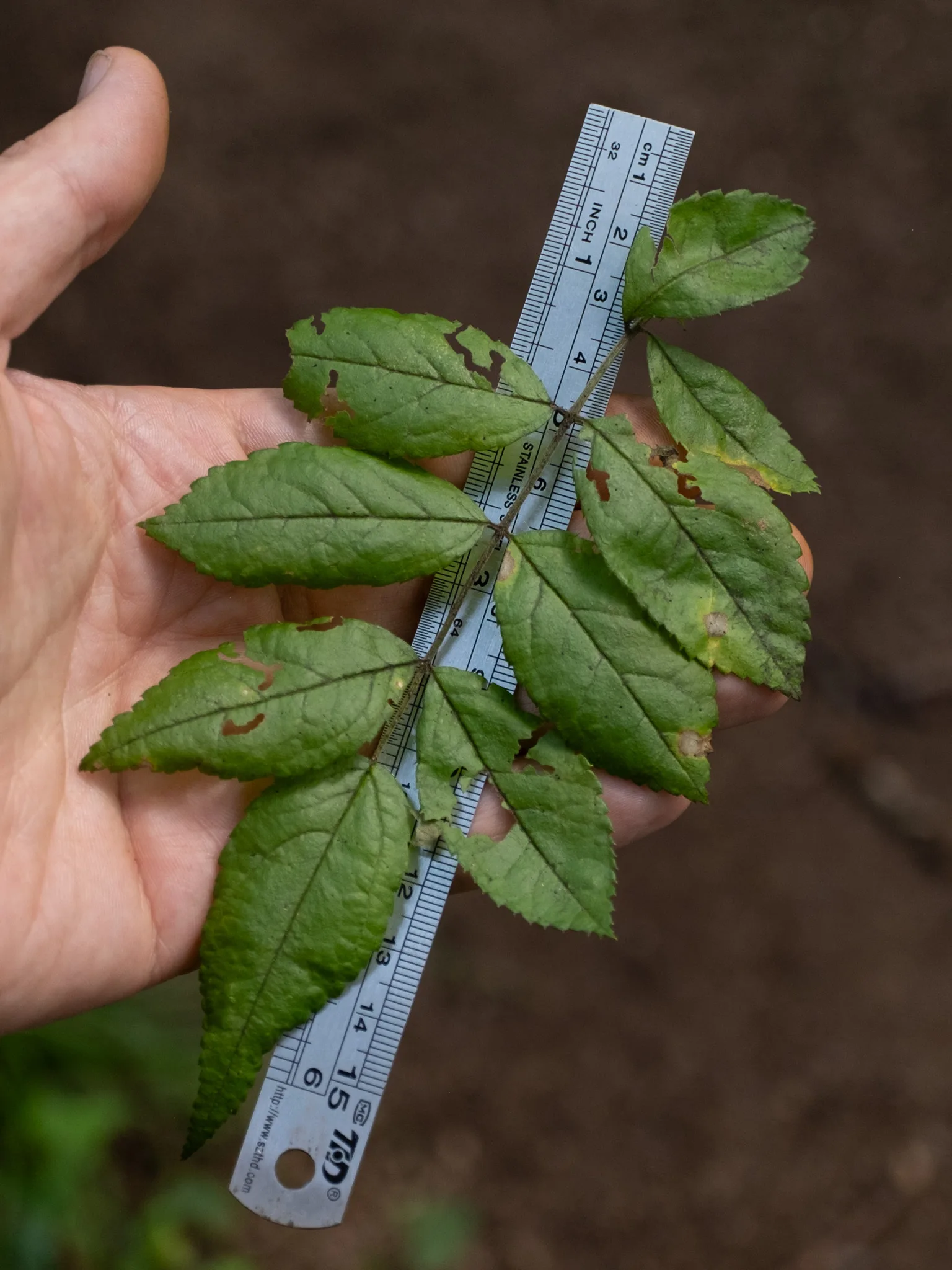
The key question: one blade or several leaflets?
To describe the structure, it helps to first look at how the leaf surface is organized. A simple leaf has a single blade; in a compound leaf, the blade is divided into units called leaflets, arranged along an axis or its branches. The word “simple” does not necessarily mean smooth: the edge or blade may have indentations and lobes without that, by itself, making the leaf compound.
Comparison using the same criteria
Comparison in prose — Criterion: visible unit. Simple: one blade. Compound: several units or leaflets. Criterion: divisions. Simple: may be entire, cleft, or lobed. Compound: the blade is divided into leaflets. Criterion: arrangement of the units. Simple: a single blade is described; compound: the leaflets may be arranged along an axis (pinnate) or gathered toward its end (palmately compound). These categories describe forms, not species.
What the petiole and axis tell us
The petiole is the small stalk that connects the leaf to the stem. In a compound leaf, the axis that bears the leaflets is called the rachis; recognizing that several units are articulated on this axis helps describe their arrangement. Stipules, when present, can also be part of the description, but their presence or absence is not enough on its own to decide whether a leaf is simple or compound.
What shape cannot resolve
A deeply cut edge can make a simple leaf look as if it has several parts, whereas the compound condition is described by the division of the blade into leaflets. For that reason, counting tips or lobes is not a sufficient criterion. In addition, some plants have different leaves in different parts or at different stages; a single isolated leaf may not represent all that variation. It is more prudent to describe what is observed than to turn a silhouette into a certain identification.
Scope of this comparison
This guide compares general morphological terms; it is not limited to a region and is not based on specimens examined for this article. The available sources support the distinction between a single blade and a blade divided into leaflets, but they do not provide here a complete anatomical key for resolving every uncertain case. Leaf structure can guide a description, but it is not enough on its own to determine a species.
Sources and references View references Hide references 3
- Hoja es.wikipedia.org
- Glosario | Biodiversidad Mexicana www.biodiversidad.gob.mx
- What leaves reveal about wildflowers | Grow Wild | Kew growwild.kew.org