Observation-guide
Snails after rain: recording what you see on a pavement
A non-capture observation guide: document encounters, distinguish moisture from cause and retain the context of the references.
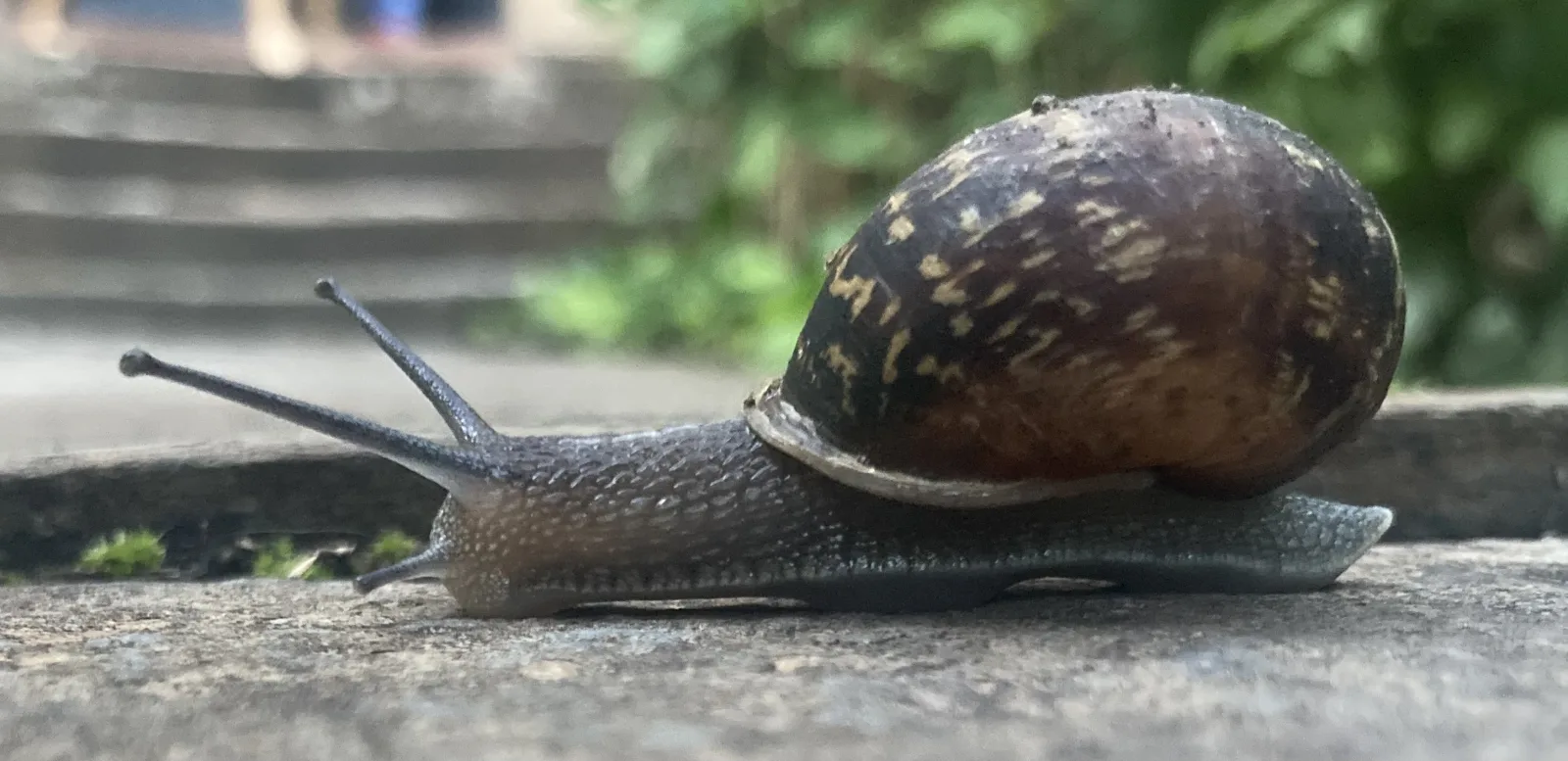
A phenomenon in context
A University of California extension note describes encounters with snails and slugs on pavements after rain, in a Californian context.
The University of Maryland links these animals with moisture and notes that they may also emerge after rainfall.
For Cornu aspersum, the Canadian agency describes sealing the shell under dry conditions to avoid desiccation.
These contexts inform observation; they do not identify an individual or quantify what happens in your neighbourhood.
One route, several visits
Choose a public route you can repeat without entering gardens or lifting shelters. On each visit note the date, approximate time, recent rain and whether the surface looks dry or damp. Record visible snails, slugs and trails separately: a trail does not count as an animal currently present.
Record visits when you see none too. Keep the route and observation time similar so your notes describe comparable outings. If you take photographs, do so from a distance without touching or moving animals; do not obstruct the path or publish sensitive locations.
These are suggestions for organising a notebook, not findings from research conducted here. Rain coinciding with encounters does not by itself demonstrate a cause: do not assign a species without adequate identification or present a few visits as a universal pattern.
Sources and references View references Hide references 3
- Cornu aspersum inspection.canada.ca
- Wet Weather Dos and Don’ts — UC ANR 2023 ucanr.edu
- Slugs and Snails on Flowers — University of Maryland Extension www.extension.umd.edu