Report
The life that depends on old trees
A hollow trunk, a crack or a decaying branch can form part of a habitat. Old trees offer much more than a green canopy.
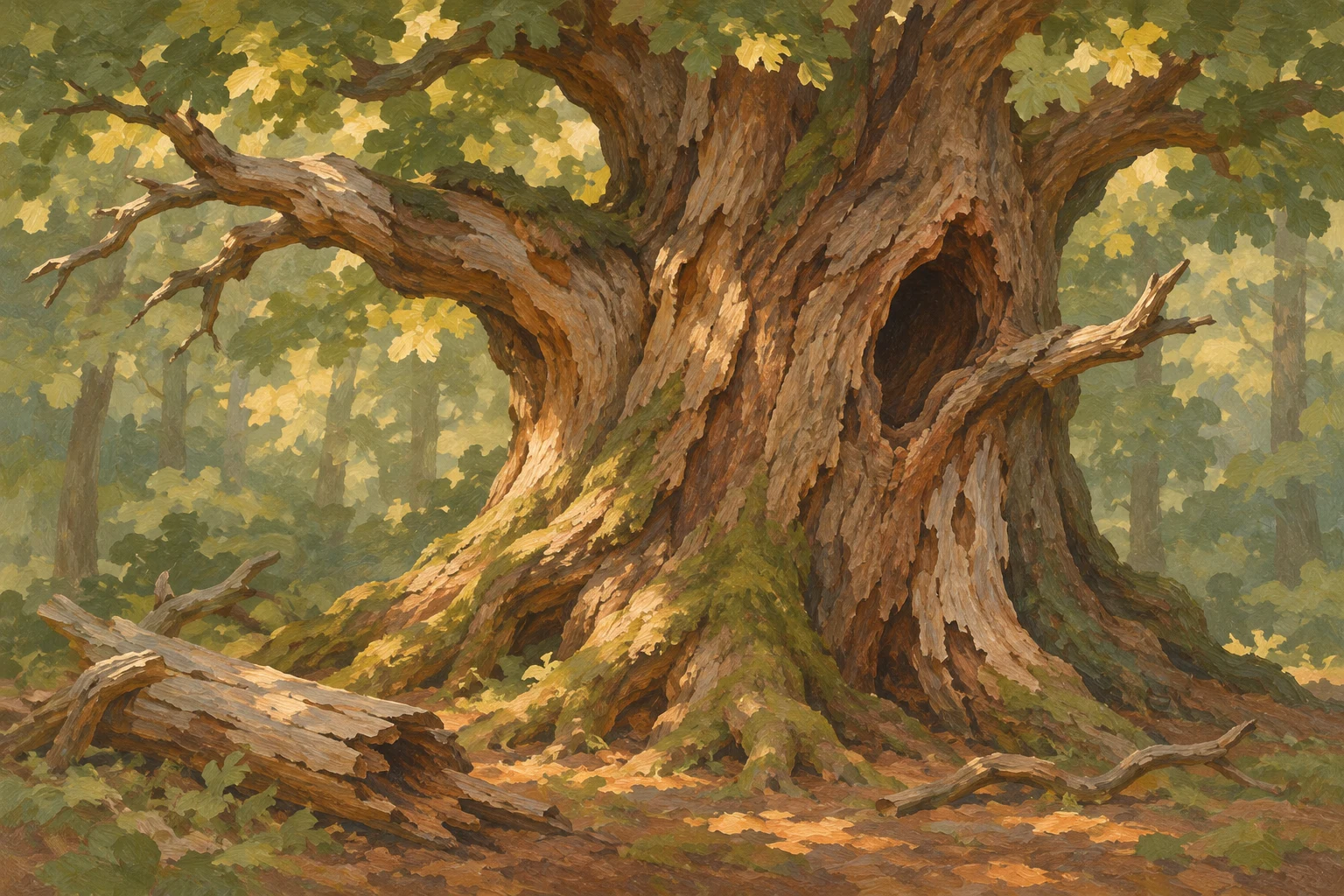
One tree, many spaces
An old tree is not a uniform surface. Cavities, loose bark and wood at different stages of decay create spaces used by other organisms. In the Ancient Tree Inventory’s British examples, a tree’s ecological importance includes both food and shelter. Looking only at its leaves therefore misses much of its role as habitat. This does not mean every old tree hosts the same inhabitants: the structures available and each organism’s requirements matter.
Changing wood supports other lives
Decomposer fungi transform wood in standing and fallen trees. That change also alters material used by invertebrates: some species favour particular decay stages, others associate with certain trees or with the fungi present. The reference identifies dead wood on ancient and veteran trees as important habitat for stag beetle larvae, for example. This illustrates a specific relationship; it does not make any piece of old wood evidence that those larvae are present.
Nests and shelters among the cracks
Cavities in old trees can hold bird nests, while cracks, hollows and loose bark provide potential bat roosts. A mature canopy also offers places to search for insects. One tree can thus bring together different resources for different animals. Woodland Trust’s British examples help explain these varied uses, but are not an inventory of the tree in front of you. Recognising habitat value and confirming which species occupy it are related questions, not equivalent ones.
Sources and references View references Hide references 1
- Ecological value ati.woodlandtrust.org.uk