Observation-guide
The red deer rut and monitoring at Quintos de Mora
The deer’s call marks a reproductive period. At Quintos de Mora, this season is also used to monitor the population and its relationship with the woodland.
What the rut communicates
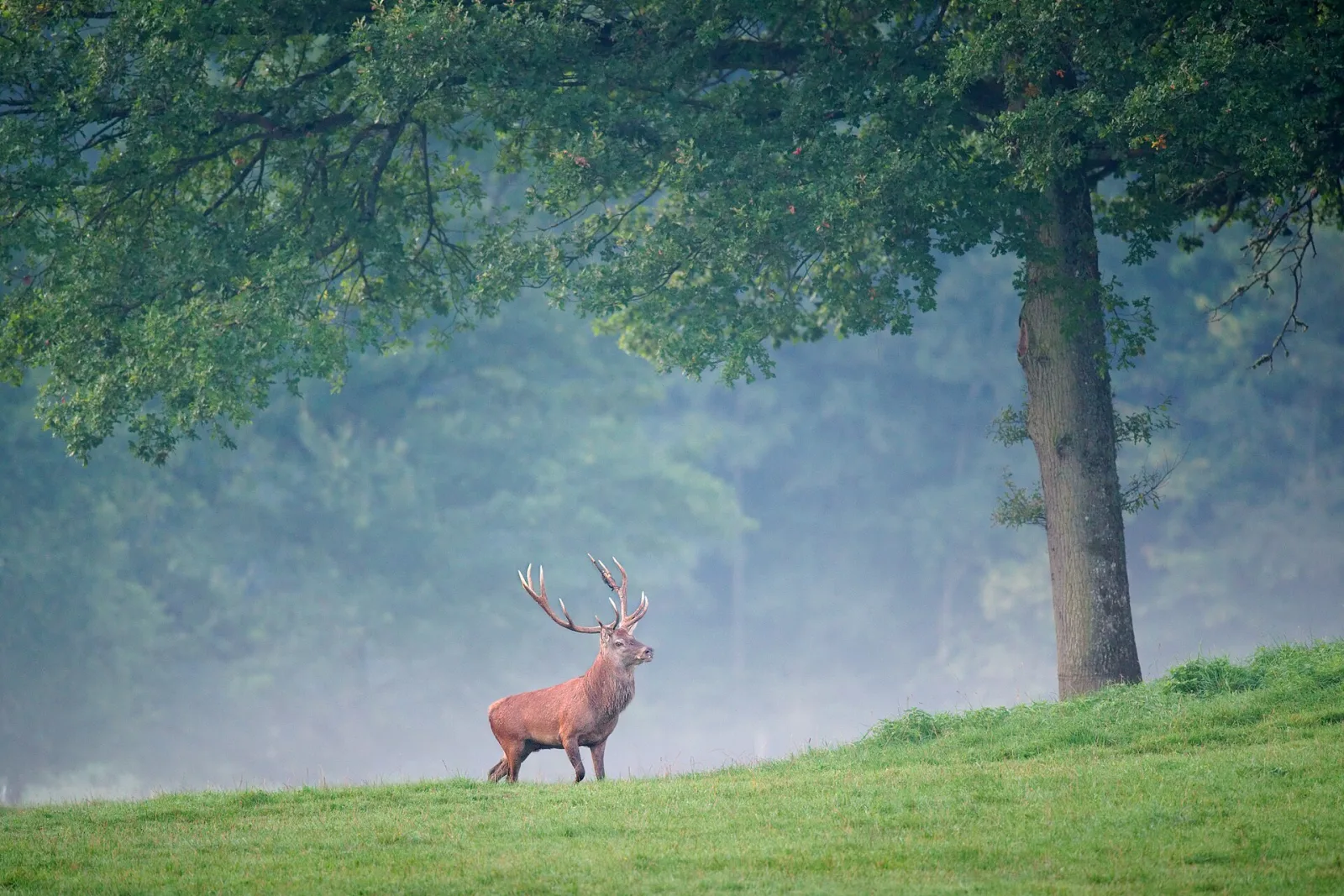
The red deer rut, Cervus elaphus, is more than an autumn soundtrack. The roars of males in rut are part of reproductive communication and are directed mainly at rival males; they may also influence females. Vertebrados Ibéricos describes substantial variation in the timing of the rut among populations. The physical condition of females and food availability help explain why its timing can shift.
A monitoring schedule, not an exact date
At Quintos de Mora, MITECO describes annual surveys using transects during the rut, from late September to early October. This provides a specific reference for understanding when this monitoring takes place. It does not establish the first and last day of the rut in any given year, nor guarantee that all animals vocalize during the same interval. It is useful to distinguish a fieldwork window from the full duration of the biological phenomenon.
Counting over time
The centre’s monitoring aims to estimate population density and trends, and compare them with what the environment can sustain. A series of surveys addresses a different question from a one-off visit to hear roars. Continuity makes it possible to study change; a single experience does not replace that monitoring.
The woodland matters too
The relationship between deer and woodland is not just a matter of how much food is available. The centre considers the regeneration of woody vegetation, the persistence of the plants most heavily browsed, animal health and coexistence with other species. Forest, scrub, pasture and ponds are all part of habitat management. Thus, the value of monitoring deer goes beyond counting individuals: it also includes understanding how to maintain ecosystem processes.
Sources and references View references Hide references 2
- Quintos de Mora: Fauna www.miteco.gob.es
- Ciervo - Cervus elaphus - Reproducción www.vertebradosibericos.org