Explanation
Viruses and bacteria under the microscope: what we know about scale and how they are studied
Bacteria are larger than viruses, but that difference alone does not explain which method is appropriate. The sources describe viral structures, observation with electron microscopes, and techniques that detect genetic material in samples: different ways of obtaining information, not a universal rule based on size.
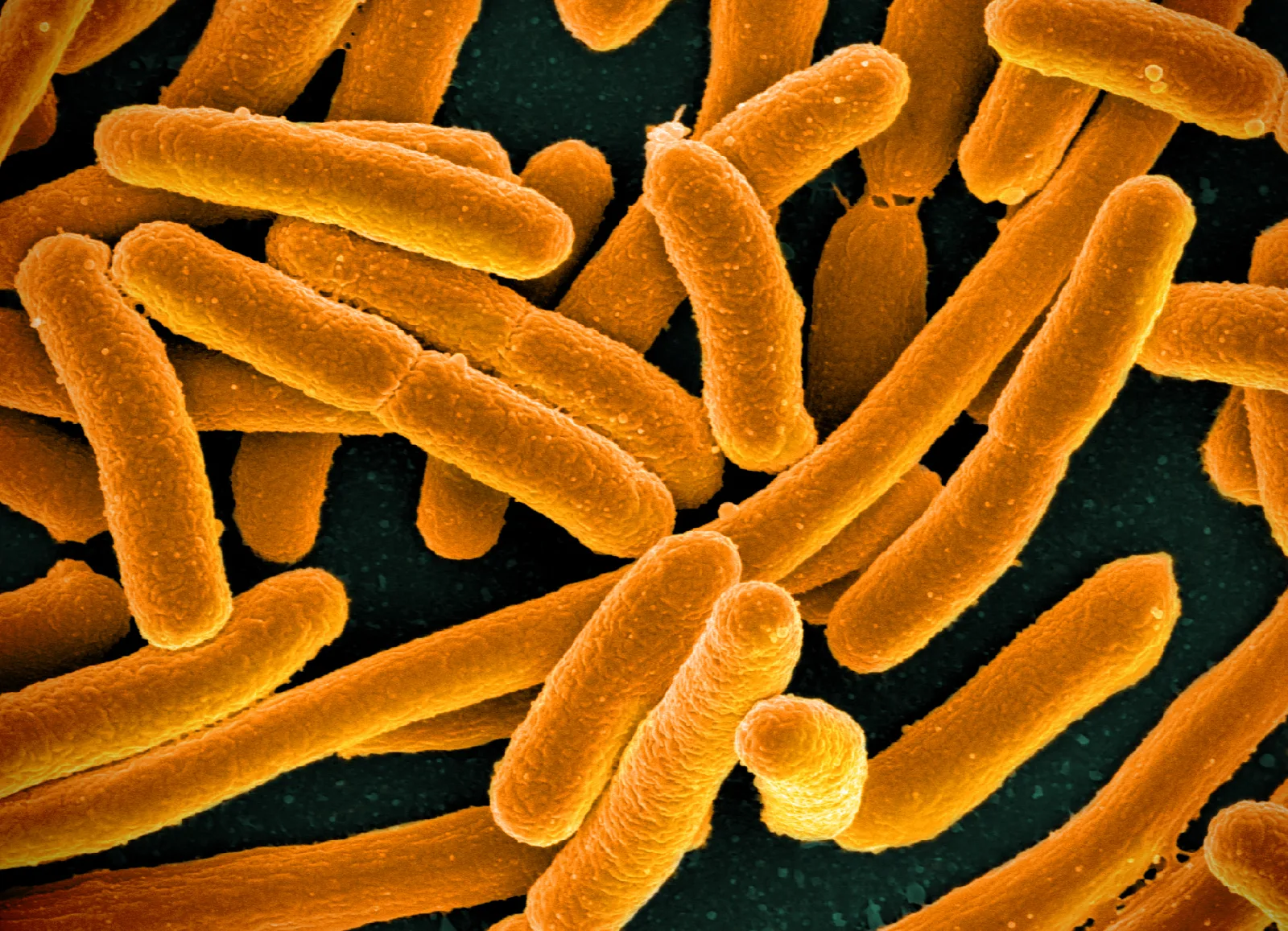
A difference in scale, not an automatic rule
Comparing bacteria and viruses involves distinguishing size, organisation and ways of studying them. A difference in scale does not itself determine which technique to use: observing a structure and detecting genetic material are different aims.
Particles, cells, and dependence
Viruses are particles containing genetic material—DNA or RNA—covered by a protein capsid; they use a host cell’s machinery to produce their components. Bacteria, by contrast, have a cell membrane and can replicate autonomously. These are differences in organization and dependence, as well as in size; it would be misleading to reduce them to a single scale.
Observation is not the same as detection
The crown-like appearance of coronaviruses can be seen through electron microscopy. That observation describes particle appearance. Detecting genetic material in a sample provides a different kind of information from an image of an organism or particle.
From sample to molecular signal
Things at the microscopic scale can also be studied without describing an image: PCR detects microorganisms through genetic material, while metagenomic sequencing analyzes nucleic acids in a sample and uses bioinformatics to identify microbial sequences without requiring culture. In this case, identification is based on molecular signals; it is not equivalent to directly observing the organism.
The question comes before the tool
Comparing an image, a cellular structure and a molecular signal requires distinguishing the information each provides. They are not interchangeable measurements or a single ladder of instruments: molecular detection is not direct observation of an organism.
Sources and references View references Hide references 4
- De la microscopía a la metagenómica: evolución y retos de la ... pmc.ncbi.nlm.nih.gov
- Infecciones víricas - PMC - NIH pmc.ncbi.nlm.nih.gov
- Enfermedades infecciosas. Concepto. Clasificación. Aspectos ... pmc.ncbi.nlm.nih.gov
- COVID-19 and post-mortem microbiological studies - PMC - NIH pmc.ncbi.nlm.nih.gov