At a glance
Essentials
- Distribution
- It is cosmopolitan and recorded on several continents, including Europe, Africa, Asia, North America, and Australia.
- Habitat
- Grows on bark, rocks, and artificial surfaces such as walls and buildings; it can also be found in nitrogen-enriched environments.
Observation guide
What to look for
- 01
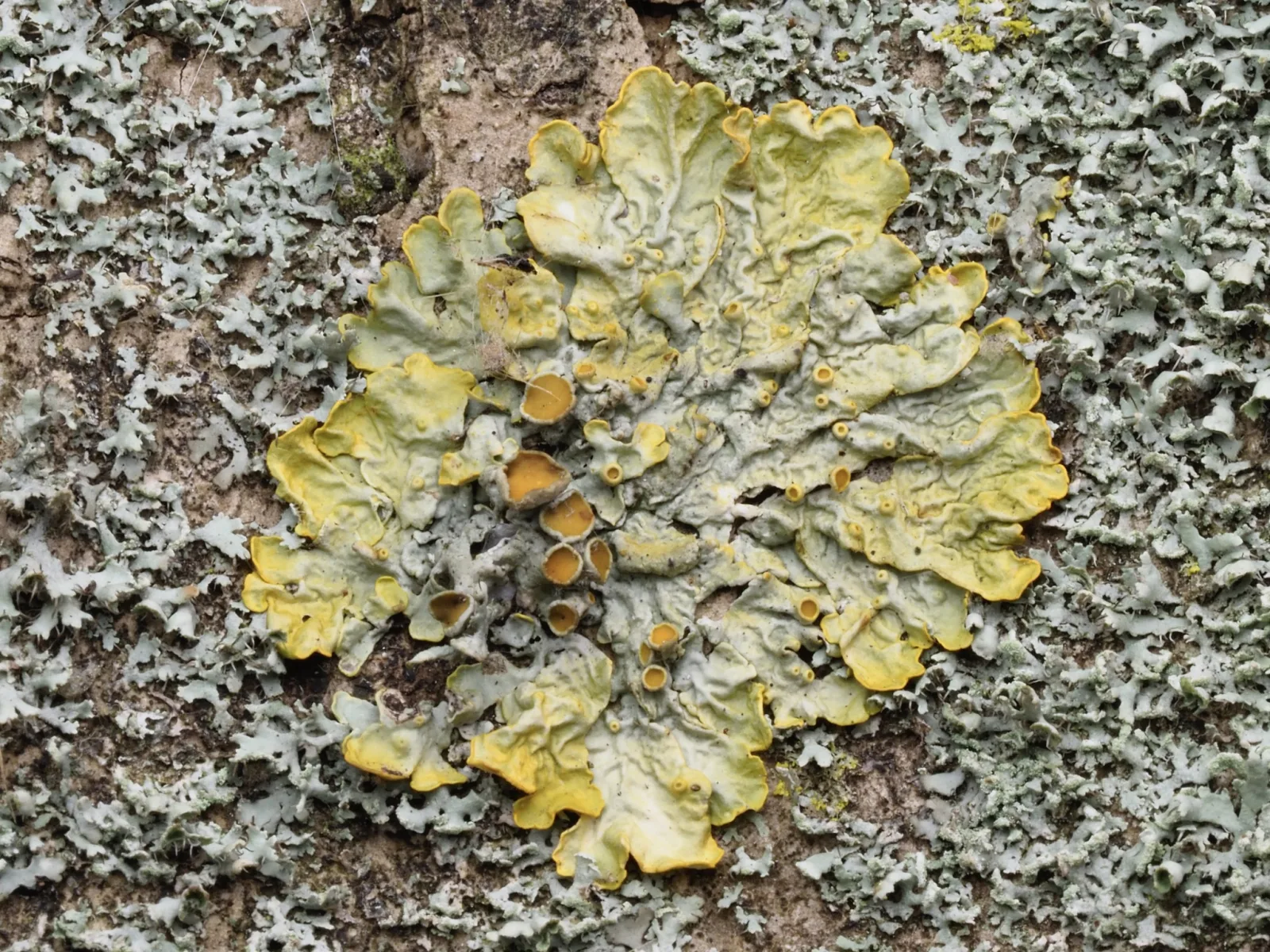
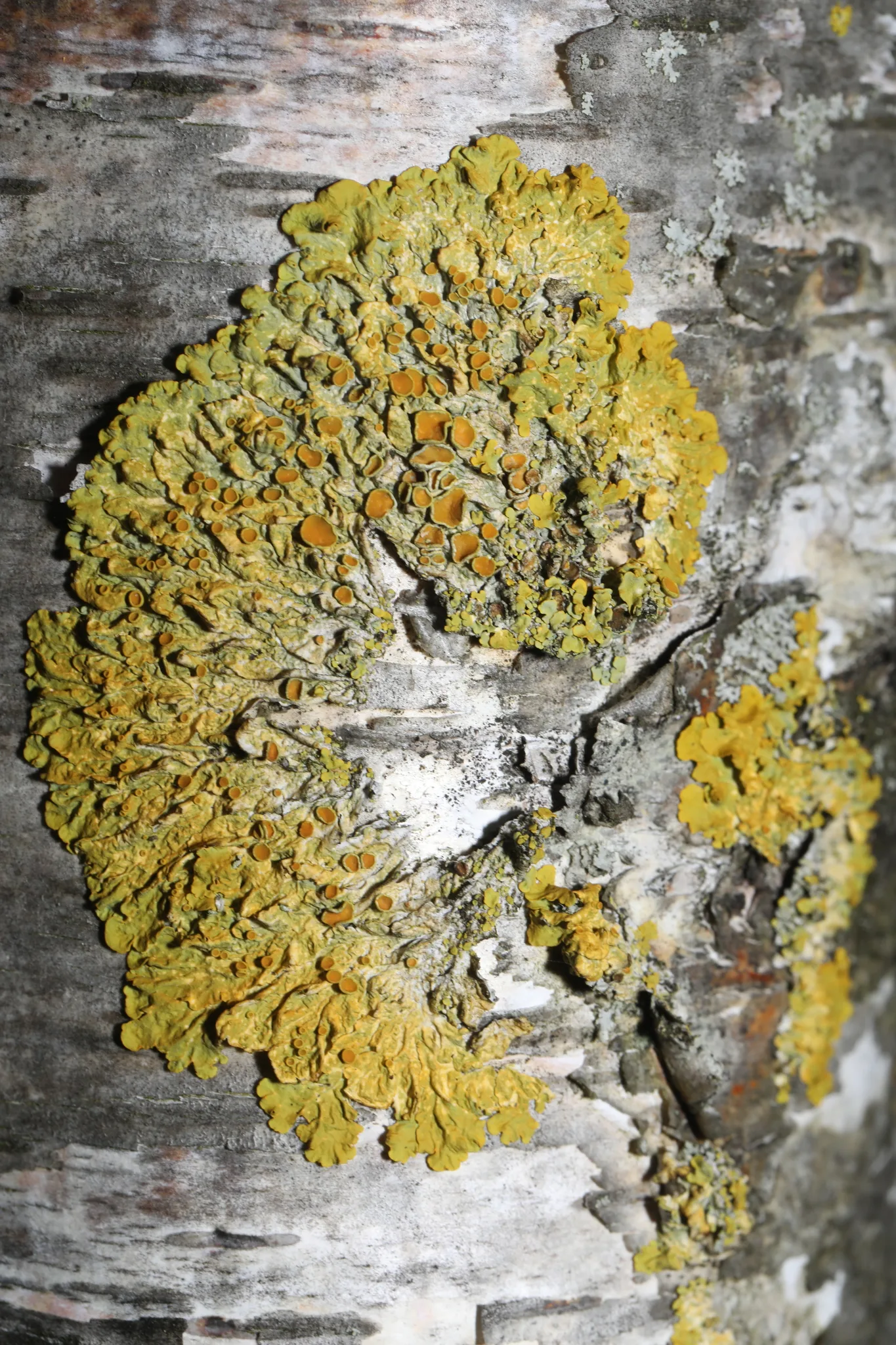
Foliate thallus with generally circular outline and lobed margins.
- 02
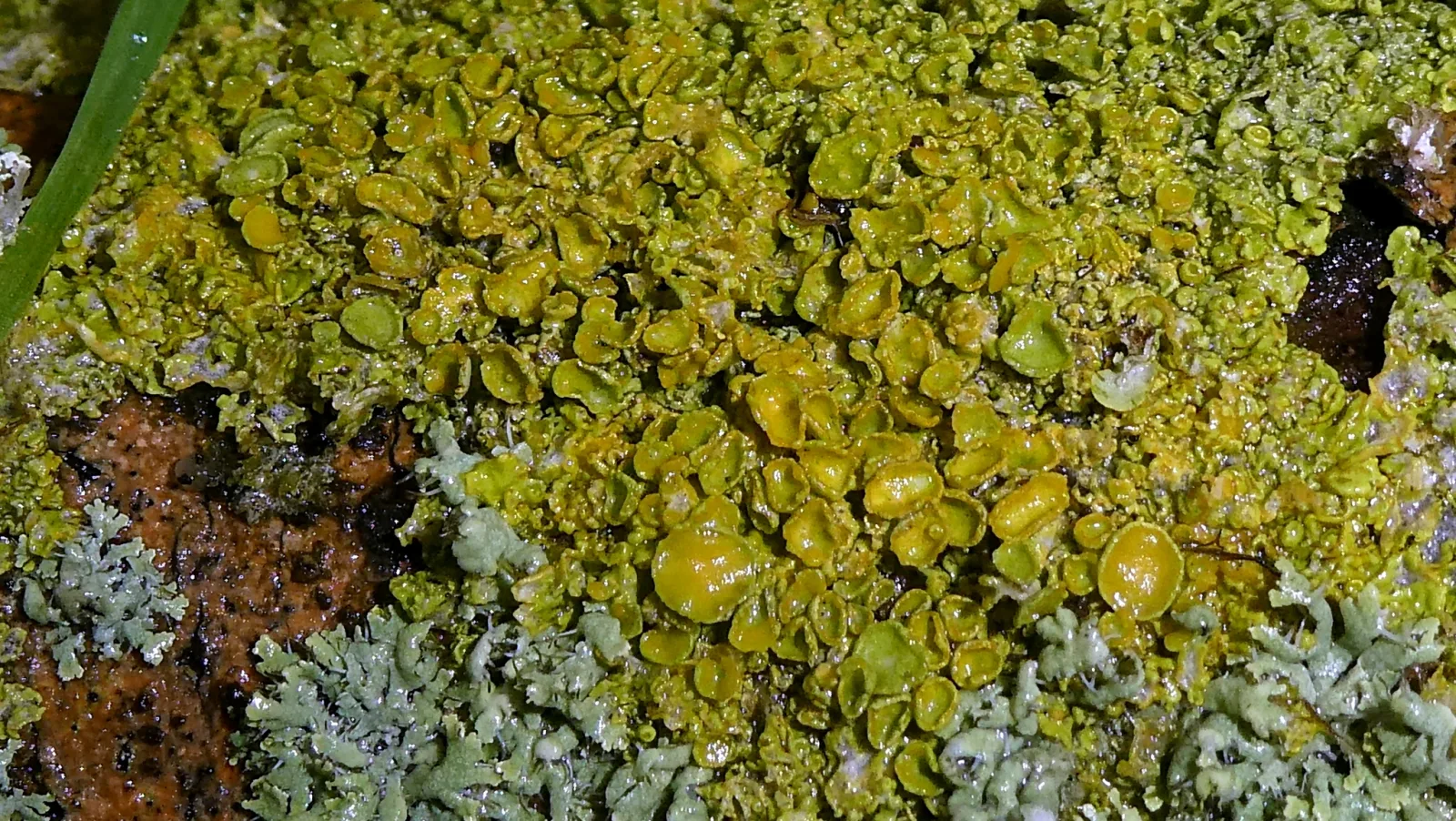
Orange-yellow color, related to the pigment parietin.
- 03
Apothecia visible as discs or open cups on the thallus; ascospores form there.
Lighting, age and viewing angle can hide features. If identification affects consumption, handling or conservation, consult specialist sources.
Ecology
Description and characteristics
Xanthoria parietina is a foliose lichen: an association in which the fungus forms the thallus together with a green alga. Among its symbiotic algae, Trebouxia decolorans has been identified, and different lines of algae of the genus Trebouxia associated with the species have also been documented.
Its thallus is usually orange-yellow; this color is largely due to parietin, a pigment produced by the fungus. Apothecia, reproductive structures where ascospores develop, may appear on the thallus.
It grows on bark, rocks, and built surfaces, including walls and buildings. It is also found in places with nitrogen nutrient input, such as trees and structures near agricultural areas or cliffs frequented by seabirds.
It has a cosmopolitan distribution, with records on several continents, including Europe, Africa, Asia, North America, and Australia.