Explanation
Horse breeds: how they are selected and why they differ
Breeding has directed different horse populations toward sport, draught work or meat production, while the environment also influences local breeds. A genomic study of five Italian breeds found signals of selection and differences in inbreeding, but cannot predict the characteristics of any individual horse.
Selection reflects different uses and contexts
Today’s horse breeds reflect both natural selection and directed breeding. The establishment of studbooks and the modernization of breeding from the second half of the 19th century intensified the selection of desired traits. In some programs for breeds described as warmbloods, the focus shifted toward rideability and athletic performance. In several cold-blood breeds, some traditional agricultural draught work was replaced by meat production during the second half of the 20th century; more recently, interest in draught work for leisure activities has also revived. These are general trends in particular programs and populations, not guarantees of suitability for any individual horse.
Environmental influence and the decline of traditional uses
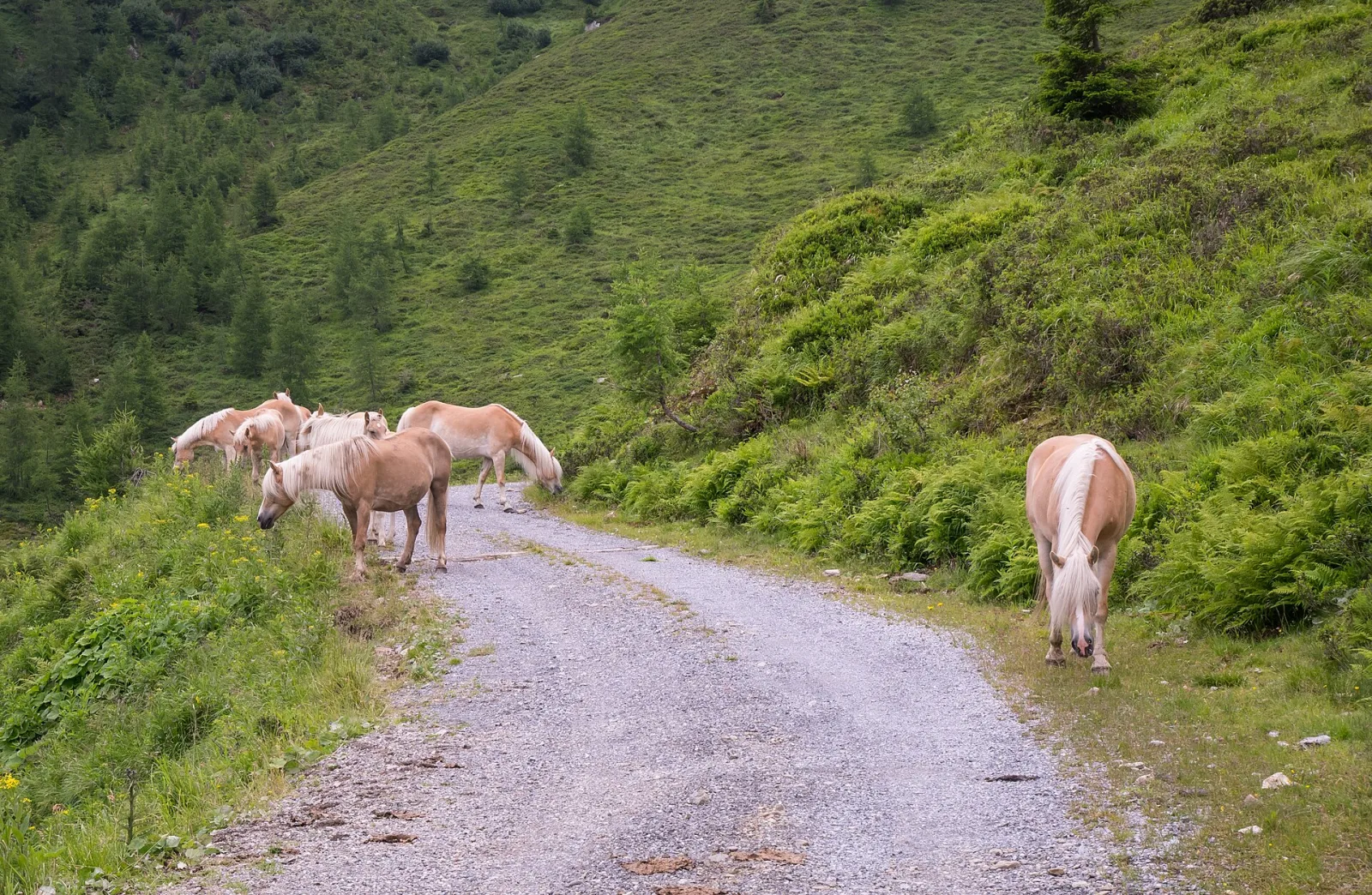
Some local populations formed largely under natural selection and with little human intervention, and may be adapted to conditions in their areas of origin. The semi-extensive breeding described for Bardigiano and Haflinger, for example, allows the environment to continue influencing these populations. However, the decline of traditional uses and population size may be accompanied by less genetic diversity and more inbreeding. Breeding history and the environment help explain differences between populations, but do not mean that all individuals of a breed are alike.
Five local Italian breeds examined
A genomic study analysed Bardigiano, Haflinger, Maremmano, Murgese and Cavallo Agricolo Italiano da Tiro Pesante Rapido, called Italian Heavy Draught Horse in English. Initially, 1,620 animals were genotyped; after quality controls, 1,498 horses and 54,825 genetic markers remained for analysis. The team looked for runs of homozygosity, in which the copies inherited from both parents are identical, and estimated genomic inbreeding from the proportion of autosomal markers covered by these runs. Regions shared by at least 70% of the animals were also considered possible signals of selection.
What the results show—and what they do not
The inbreeding coefficient based on runs of homozygosity ranged from 0.15 to 0.23. Bardigiano and Haflinger had the highest values; Maremmano, Murgese and Cavallo Agricolo Italiano da Tiro Pesante Rapido had the lowest. The authors consider selective breeding a probable explanation for the higher values, but the result applies to the populations studied and does not allow an individual horse’s inbreeding to be inferred from its breed.
The analysis found 23 homozygosity islands across 12 chromosomes. Most occurred in the three breeds the study classifies as cold-blood, especially on equine chromosome 3. The regions overlapped with 83 quantitative trait loci and 76 genes associated with morphology and health. This overlap identifies candidate regions for research; by itself, it does not prove that a gene causes a trait or explain all visible differences between breeds.
Population differences, not individual predictions
These results concern five local Italian breeds and the animals included in that study. They are not a ranking of all breeds or a direct comparison of the appearance, temperament or performance of individual horses. Breeding categories and genomic signals describe population trends: understanding an individual’s characteristics requires data about that animal, not just its breed label.
Sources and references View references Hide references 1
- exploring genetic diversity in five native horse breeds - PMC pmc.ncbi.nlm.nih.gov