Explanation
What determines whether a fish survives catch and release
Survival depends on the species and on how the fish is caught, handled and released. Depth can add barotrauma, and swimming away does not guarantee that it will survive afterward.
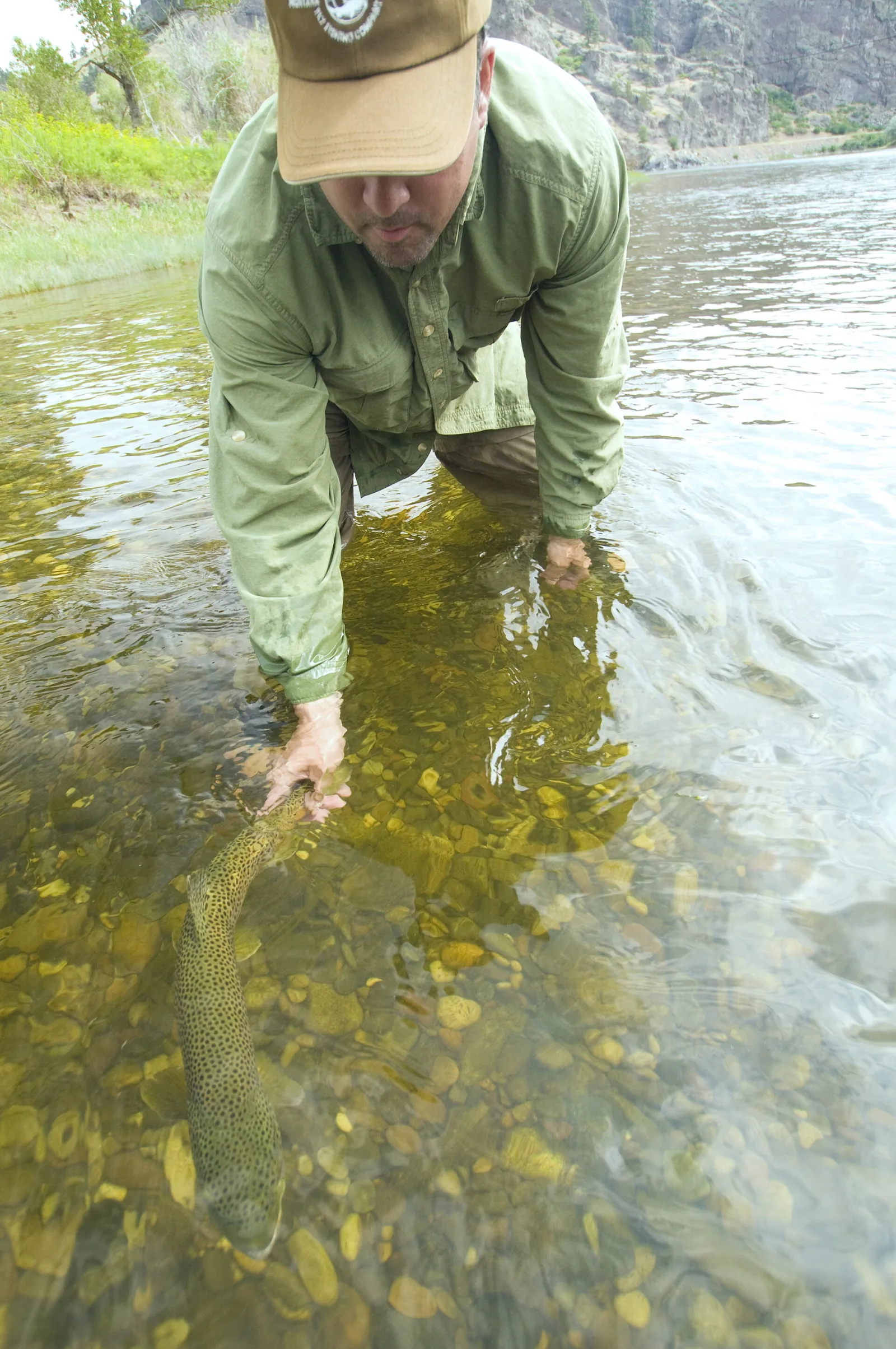
Returning it to the water does not guarantee survival
Catch and release does not guarantee that a fish will survive. Its chances depend, among other factors, on the equipment and capture techniques, how long it spends out of the water, how it is handled and the conditions in which it is released. Practices that reduce stress and injury may improve its chances, but cannot ensure the outcome. Seeing it swim away also does not confirm that it will survive after release.
Capture, handling and air exposure
The equipment used and the way a fish is handled affect the stress and injury it may experience. NOAA recommends using gear strong enough to shorten the fight, a soft, knotless net, and tools that make it easier to remove the hook with less handling. It also advises keeping the fish in the water when possible and minimizing the time it spends out of the water.
A study of Alaska sablefish examined capture stress and time out of the water in a commercial fishing context. During the experiment, all survived capture by hook and line when handled carefully. However, their reflexes were impaired; keeping them out of the water also caused reflex impairment. NOAA reported no mortality in the experiment, but this limited result does not show that air exposure is risk-free under other conditions or for other species, nor that fish always survive after release. The researchers suggested that impaired reflexes could affect responses to predators, without establishing that this caused mortality in the study.
Depth can cause barotrauma
When a fish rises rapidly from deep water, the change in pressure can expand gases in the swim bladder and other organs. This injury is called barotrauma. Physical signs may include a swollen abdomen, bulging eyes and a stomach protruding from the mouth. Severity increases with capture depth, but susceptibility also varies among species.
There is no single response for all affected fish. NOAA lists descent devices, release weights and baskets among the tools available for returning them to depth. The New South Wales source also emphasizes that the response depends on the species and the severity of the symptoms; therefore, a particular technique should not be treated as a universal solution.
Results vary by species and fishing gear
The sablefish experiment does not provide a general survival rate for other fish or fisheries. Its results apply to that species, hook-and-line capture and careful handling.
Evidence summarized by the FAO on trawl discards describes mortality as varying with species and the conditions of capture and discarding. In that context, air exposure clearly affects stress and mortality. The chapter also warns that factors affecting discarded fish may differ from those affecting fish that escape from nets. These commercial fishing results cannot be used to directly calculate survival in recreational fishing.
What can be observed
Slow swimming, bulging eyes or a distended abdomen may be signs of barotrauma, but observing a fish for a short time is not enough to know whether it will survive afterward. Visible signs describe its condition at that moment; on their own, they do not guarantee that it will live or die after swimming away.
Sources and references View references Hide references 4
- Fish Out of Water: How Capture Affects Sablefish Health, ... www.fisheries.noaa.gov
- Catch and Release Fishing Best Practices NOAA Fisheries
- Barotrauma and Release Weights New South Wales Department of Primary Industries and Regional Development