At a glance
Essentials
- Size
- Cap 3 to 10 cm in diameter; stipe 8 to 15 cm in length and 6 to 12 mm in thickness. The range may vary with age, sex and population.
- Distribution
- Widespread in the northern hemisphere (Eurasia and North America); also recorded in Australia, New Zealand, and South Africa, mainly in urban or disturbed areas.
- Habitat
- Saprotrophic on decaying wood, often buried; also in meadows, gardens, and soils rich in organic matter.
- Activity
- Fruits from spring to autumn, often after rain.
Observation guide
What to look for
- 01
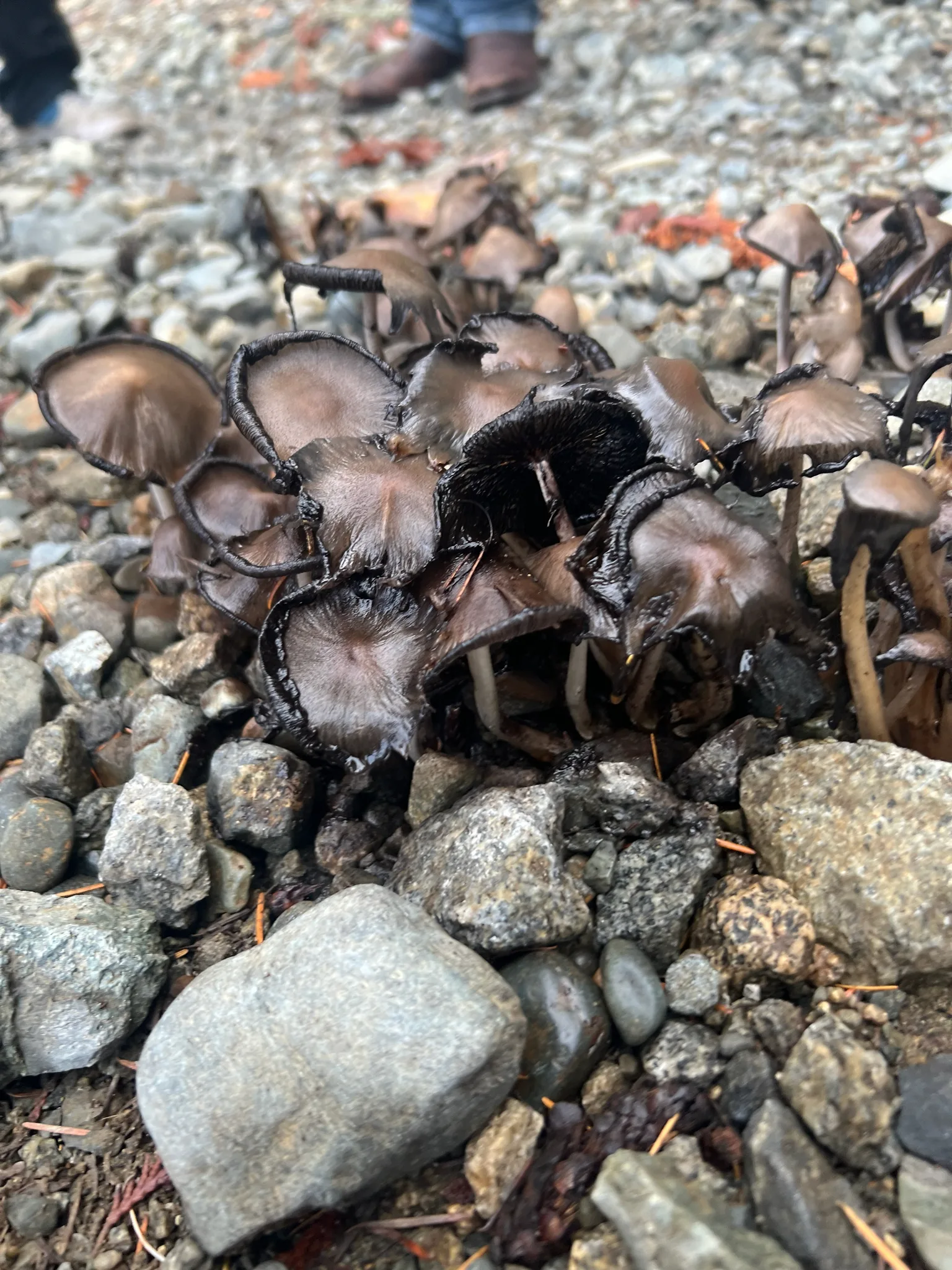
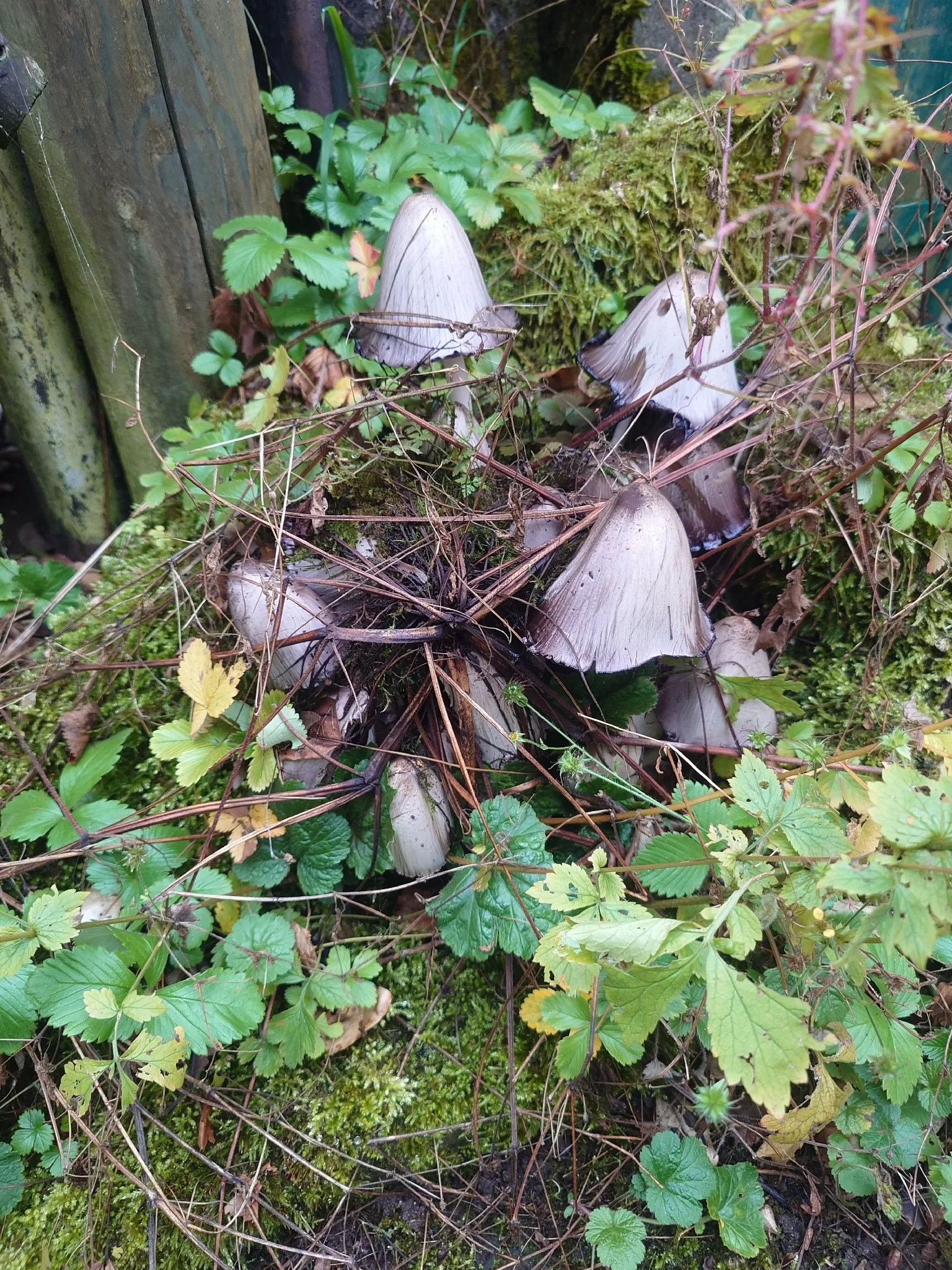
Ovoid to conical cap, gray to brownish-gray, with fine scales in the center and a margin that tears and liquefies.
- 02
Free gills, white at first and black upon maturing, which liquefy into a black liquid (deliquescence).
- 03
White, hollow, fibrous stipe, 8 to 15 cm long, with a ring often difficult to see.
- 04
Growth in groups or fascicles, frequently on buried wood or in urban grassy areas.
Lighting, age and viewing angle can hide features. If identification affects consumption, handling or conservation, consult specialist sources.
Ecology
Description and characteristics
Coprinopsis atramentaria is a fungus of the family Psathyrellaceae characterized by its process of deliquescence, in which the gills and cap progressively liquefy until forming a black liquid containing the spores. The cap, 3 to 10 cm in diameter, is ovoid at first and becomes campanulate or conical; its surface is gray to brownish-gray, often with fine tight scales in the center and radial striations. The gills are free, first white or grayish, and turn black upon maturing. The stipe is white, hollow, fibrous, and 8 to 15 cm in length, with a ring that can be difficult to observe. The flesh is white to pale gray and does not present marked odor or taste.
This fungus is saprotrophic and grows in groups or fascicles on decaying wood, which is often buried, making the specimens appear to grow directly from the soil. It is also found in grassy areas, meadows, gardens, and disturbed urban areas. Fruiting occurs mainly from spring to autumn, most frequently after rain. In North America, it is widely distributed and found in forests and urban environments; in the United Kingdom, it is common in pastures, parks, and gardens. It has also been recorded in Australia, New Zealand, and South Africa, generally in urban or disturbed locations.