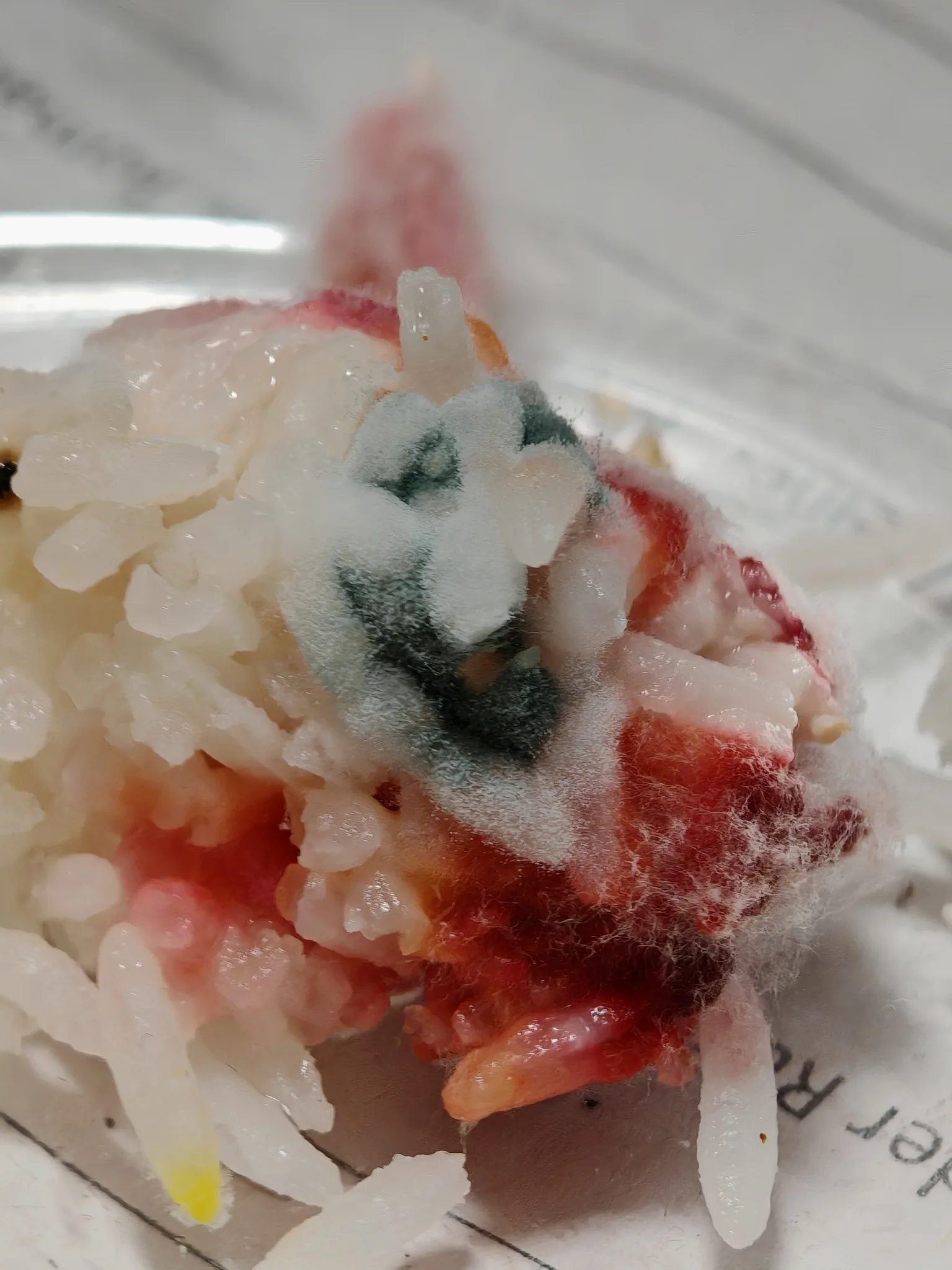
At a glance
Essentials
- Size
- Conidia of 3.0–4.0 × 2.8–3.8 micrometers. The range may vary with age, sex and population.
- Distribution
- Cosmopolitan; detected in temperate and subtropical regions, the upper atmosphere, and Antarctica.
- Habitat
- Indoor environments, especially in damp or water-damaged buildings; soil, vegetation, and food products.
- Activity
- Asexual reproduction via air-transported conidia; important human allergen.
- Diet
- Saprobiont; decomposes dead organic matter and causes rots in foods.
Observation guide
What to look for
- 01
Colonies of blue to bluish-green color that may exude a yellow pigment; identification requires microscopic and molecular traits.
- 02
Brush-shaped conidiophores that produce chains of conidia.
Lighting, age and viewing angle can hide features. If identification affects consumption, handling or conservation, consult specialist sources.
Ecology
Description and characteristics
Penicillium chrysogenum is a fungal species of the genus Penicillium, previously known as Penicillium notatum. It belongs to the kingdom Fungi, division Ascomycota, class Eurotiomycetes, and order Eurotiales. It is a cosmopolitan saprobiont organism found in a wide variety of habitats, from soil and vegetation to indoor environments and food products. In nature, its main function is the decomposition of organic materials, where it can cause destructive rots in food crops. It is also a frequent contaminant of indoor environments, especially in buildings with moisture or water damage, and is associated with food deterioration.
The identification of this species requires caution, as it cannot be based solely on the color of the colonies. Although the conidia are typically blue to bluish-green and the fungus sometimes exudes a yellow pigment, the observation of morphological and microscopic traits is necessary to confirm its identity. Since it is part of a cryptic species complex that includes P. rubens, P. notatum, and others, DNA sequencing is essential to distinguish it from closely related species. Phylogenetic studies have established that Alexander Fleming's original strain, which produced penicillin, corresponds to P. rubens, a distinct but close species to P. chrysogenum.
The fungus reproduces asexually by forming dry chains of spores (conidia) from brush-shaped conidiophores. These conidia are transported by air currents to new colonization sites. The airborne spores of P. chrysogenum are important human allergens, and vacuolar proteases and alkaline serine proteases have been implicated as the main allergenic proteins. The species has been detected in significant concentrations in air and household dust, and its presence has been documented even in the upper atmosphere and in Antarctica.