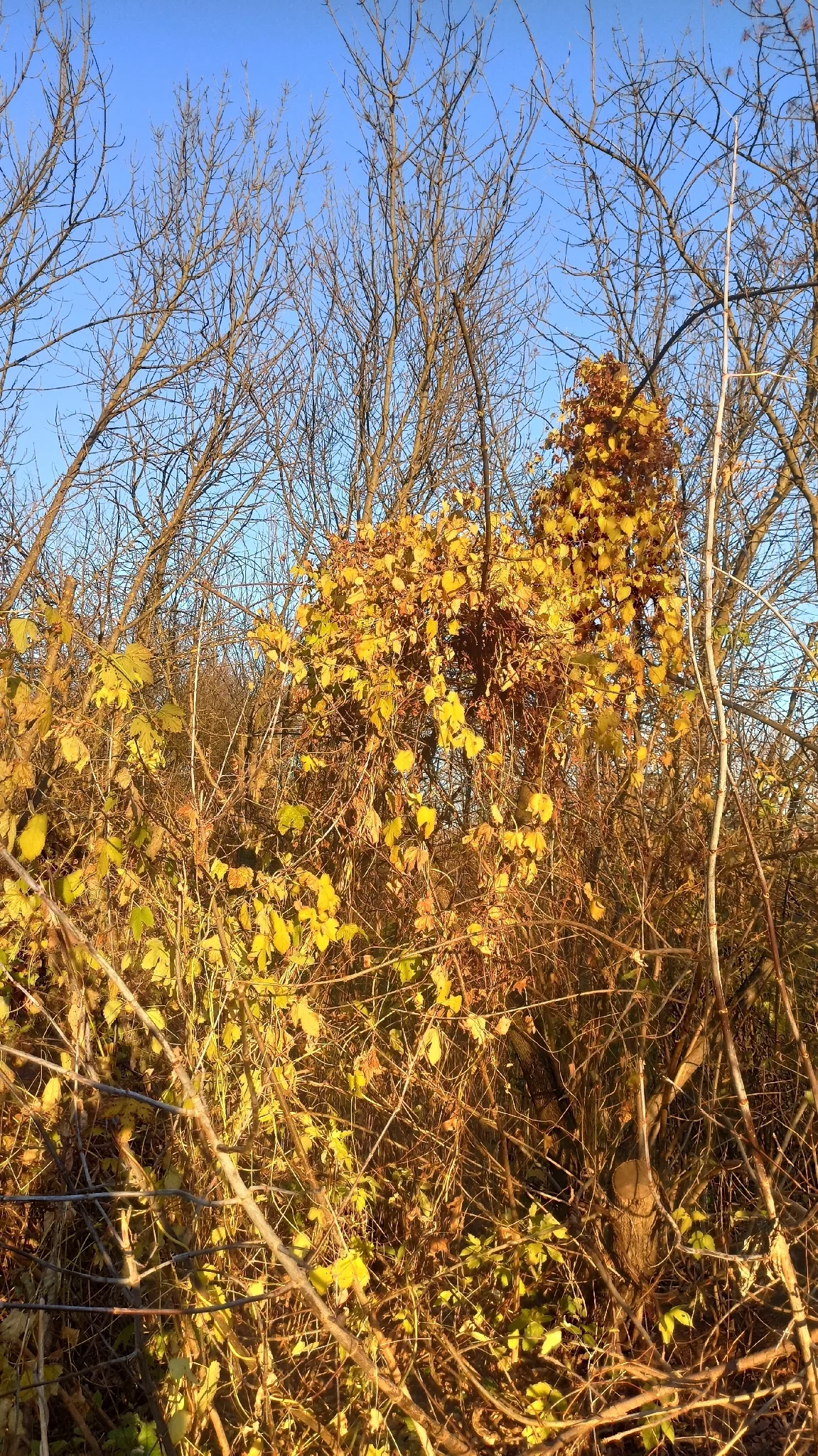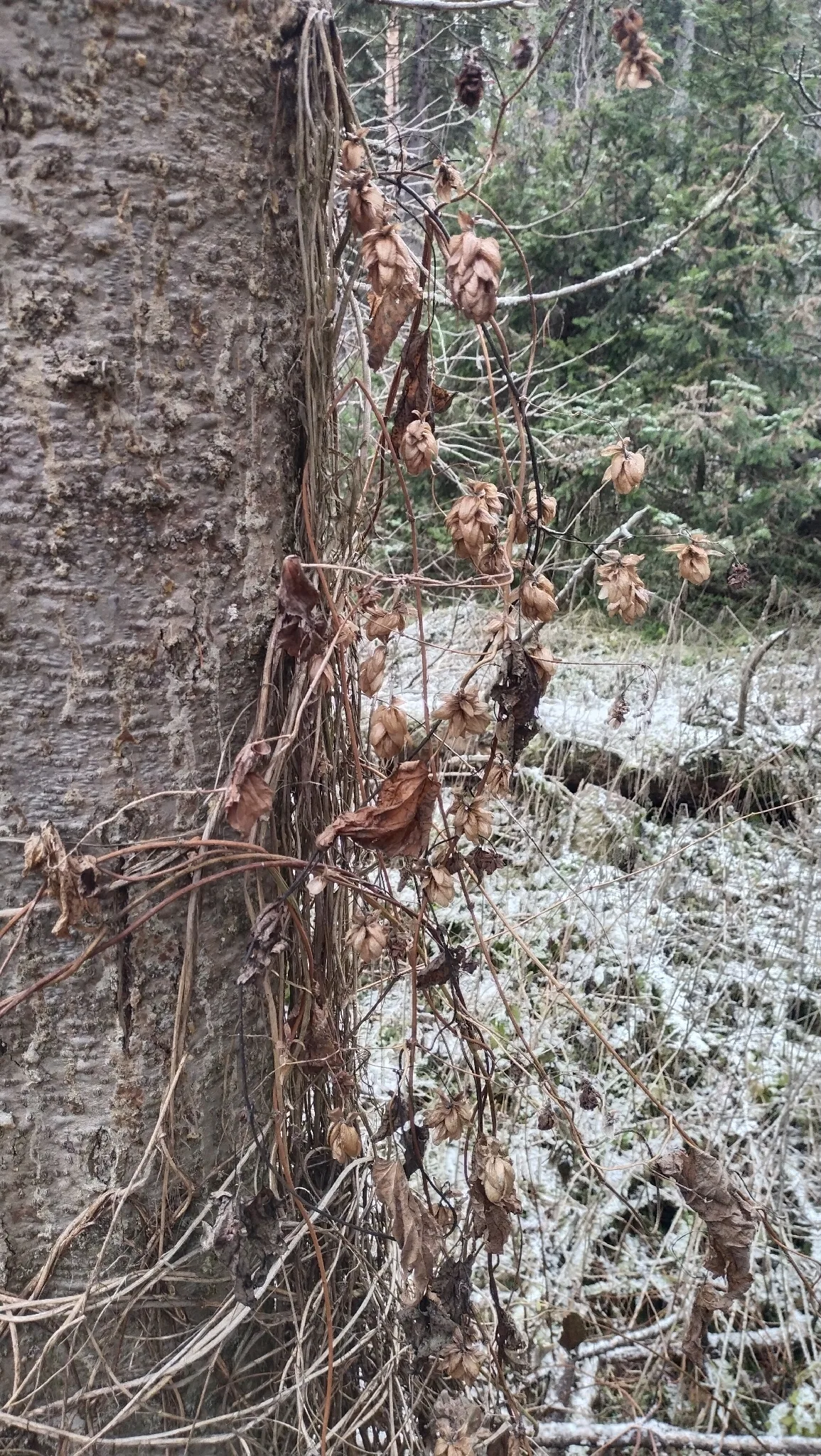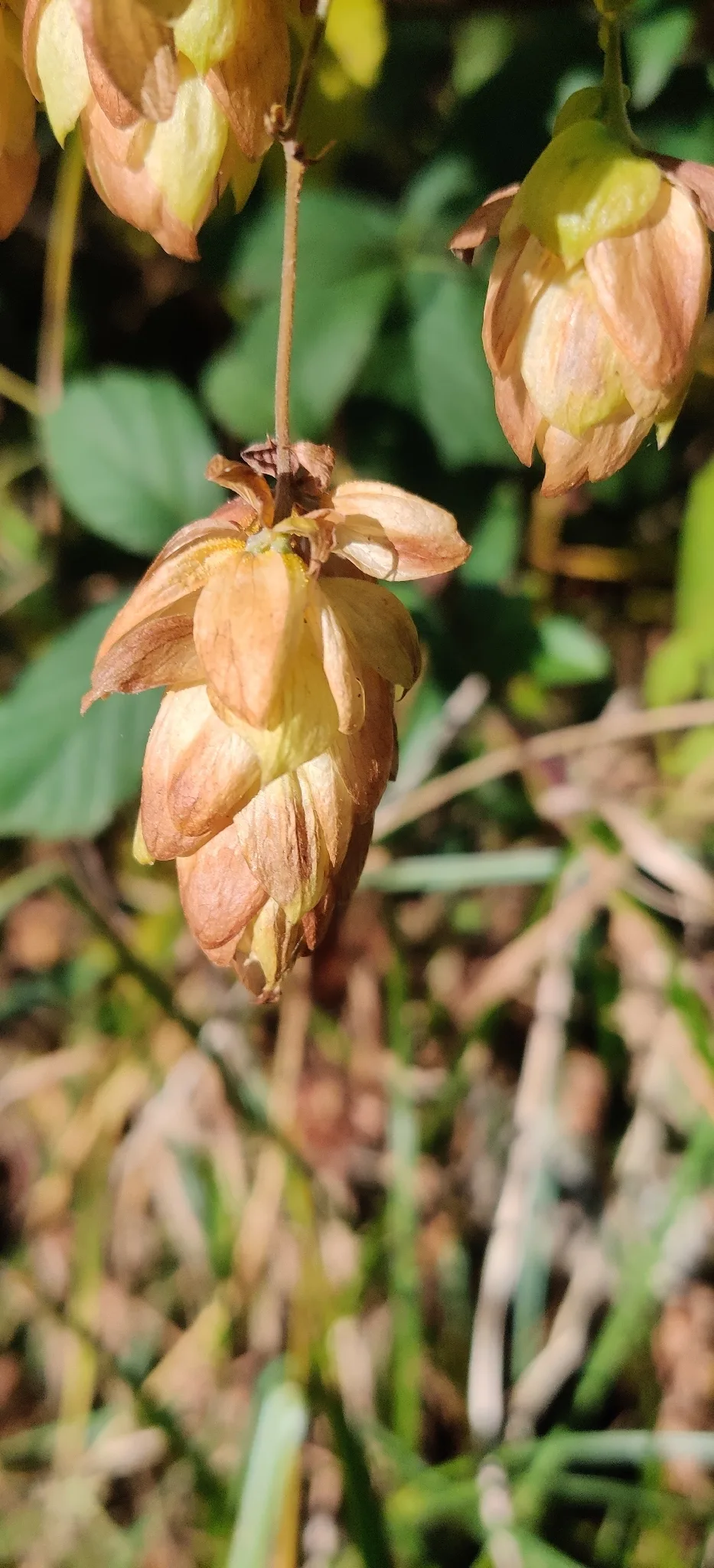
At a glance
Essentials
- Size
- Can reach up to 10 meters in height and live up to 20 years. The range may vary with age, sex and population.
- Distribution
- Native to Europe, Western Asia, and North America. In Europe, it is common in northern Italy and central Europe, with presence in all Italian regions although rarer towards the south.
- Habitat
- Grows in cool environments, fertile and moist soils, such as riverbanks, forest edges, and hedges, from the plain to altitudes of 1200 meters.
- Activity
- It is a heliophilic plant that grows best in full sun and with moderate amounts of rain. Its flowers attract butterflies and other insects.
- Conservation
- Least Concern (IUCN 3.1) for the Europe region.
Observation guide
What to look for
- 01
Twining stems with rigid trichomes that facilitate gripping supports, without the presence of tendrils.
- 02
Simple leaves, palmately lobed, generally with 3 to 5 toothed lobes; the initial leaves of the season may be unlobed.
- 03
Dioecious plant: male flowers in panicles and female flowers in cones or catkins on separate plants.
- 04
Considerable height, reaching up to 10 meters under favorable conditions, with a perennial underground rhizome.
Lighting, age and viewing angle can hide features. If identification affects consumption, handling or conservation, consult specialist sources.
Ecology
Description and characteristics
Hops is a perennial herbaceous plant of the family Cannabaceae, native to Europe, Western Asia, and North America. It is distinguished by its ability to climb without tendrils, using twining stems equipped with rigid trichomes that allow it to grip supports. Its aerial parts, which regrow each spring from an underground rhizome, can reach up to 10 meters in height and die in autumn. The leaves are simple, palmately lobed, with 3 to 5 toothed lobes, although the first of the season may be small and unlobed.
The species is dioecious, meaning that male and female flowers develop on separate plants. The female flowers, light green in color, are grouped in catkins or cones (strobiles) and are used in the production of beer due to their resin and essential oil content. The male flowers, yellowish-green, form panicles. The fruit is a dry achene that does not open when mature. The plant is wind-pollinated and its flowering usually occurs in summer, around July or August in the Northern Hemisphere.